Fire & Smoke Damage Restoration Sydney
From emergency make-safe and soot removal to smoke-odour treatment, firefighting-water extraction and structural drying, WDMS provides a coordinated restoration response for homes, strata and commercial properties across Sydney.
24/7 Emergency Response
Fast help to secure affected areas and reduce the risk of further property damage.
Free Initial Damage Assessment
Assessment of visible fire, smoke, soot and moisture damage with eligible approved restoration work.
Fire + Smoke + Water Restoration
Soot, odour and firefighting-water damage can be managed through one coordinated restoration process.
Insurance-Ready Documentation
Eligible projects can include damage photographs, moisture readings, scopes of work and restoration records.
24/7 Fire & Smoke Damage Response Sydney
We assess the affected areas, identify visible and hidden moisture, and explain the recommended next steps.
24/7 Emergency Response
Fast help to secure affected areas and reduce the risk of further property damage.
Free Initial Damage Assessment
Assessment of visible fire, smoke, soot and moisture damage with eligible approved restoration work.
Fire + Smoke + Water Restoration
Soot, odour and firefighting-water damage can be managed through one coordinated restoration process.
Insurance-Ready Documentation
Eligible projects can include damage photographs, moisture readings, scopes of work and restoration records.
IICRC-Certified Fire & Smoke Restoration Expertise
A fire can affect far more than the area directly exposed to flames. Smoke, soot, odours and firefighting water may spread into adjoining rooms, wall cavities, ceilings, flooring and other building materials.
Effective restoration therefore goes beyond cleaning the visibly burnt area. It starts with understanding the full extent of the damage, identifying what can be safely restored and determining which materials may need removal.
At
WDMS, we combine fire and smoke
damage assessment, soot and residue removal, smoke-odour treatment,
water extraction,
structural drying
and clear restoration documentation through one coordinated process.
GET AN INSTANT FREE QUOTE!
Contact Us
We will get back to you as soon as possible.
Please try again later.
Common Fire & Smoke Damage We Restore
Fire damage is rarely limited to one visible area. Depending on the incident, heat, smoke, soot, odours and firefighting water may affect adjoining rooms, contents and concealed building materials.
Structural Fire Damage
Burnt or heat-affected walls, ceilings, flooring, framing and other building materials requiring assessment, cleaning or removal.
Smoke & Soot Contamination
Residues deposited on walls, ceilings, cabinetry, flooring and surfaces throughout the property.
Persistent Smoke Odours
Smoke odours absorbed into porous materials, furnishings and enclosed areas after a fire or smoke event.
Firefighting Water Damage
Water and moisture left behind after extinguishing efforts, potentially affecting floors, walls, carpet, insulation and structural materials.
Damaged Materials & Contents
Items and building materials that may need specialised cleaning, restoration or controlled removal depending on their condition.
Hidden Smoke Spread
Smoke and soot travelling into adjoining rooms, ceiling spaces, cavities or areas that were not directly exposed to flames.
Kitchen & Appliance Fires
Localised fires that may still create widespread smoke, grease, soot and odour contamination throughout the property.
Strata & Commercial Fire Damage
Fire and smoke affecting apartments, common areas, offices, retail premises and other larger properties requiring coordinated restoration.
what we do
Complete Fire & Smoke Restoration Support
Fire damage restoration involves more than removing visible soot. Depending on the severity of the incident, a property may require emergency make-safe work, smoke damage cleaning, structural drying, damaged-material removal and detailed restoration before repairs can begin.
WDMS provides coordinated fire damage restoration services in Sydney, helping homeowners, strata managers and commercial property owners manage the full restoration process from initial assessment through to final handover.
Insurance-Ready Restoration Documentation
For eligible projects, WDMS can provide photographs, assessment records, scopes of work and restoration documentation to support communication with your insurance company, strata manager, broker or loss adjuster.
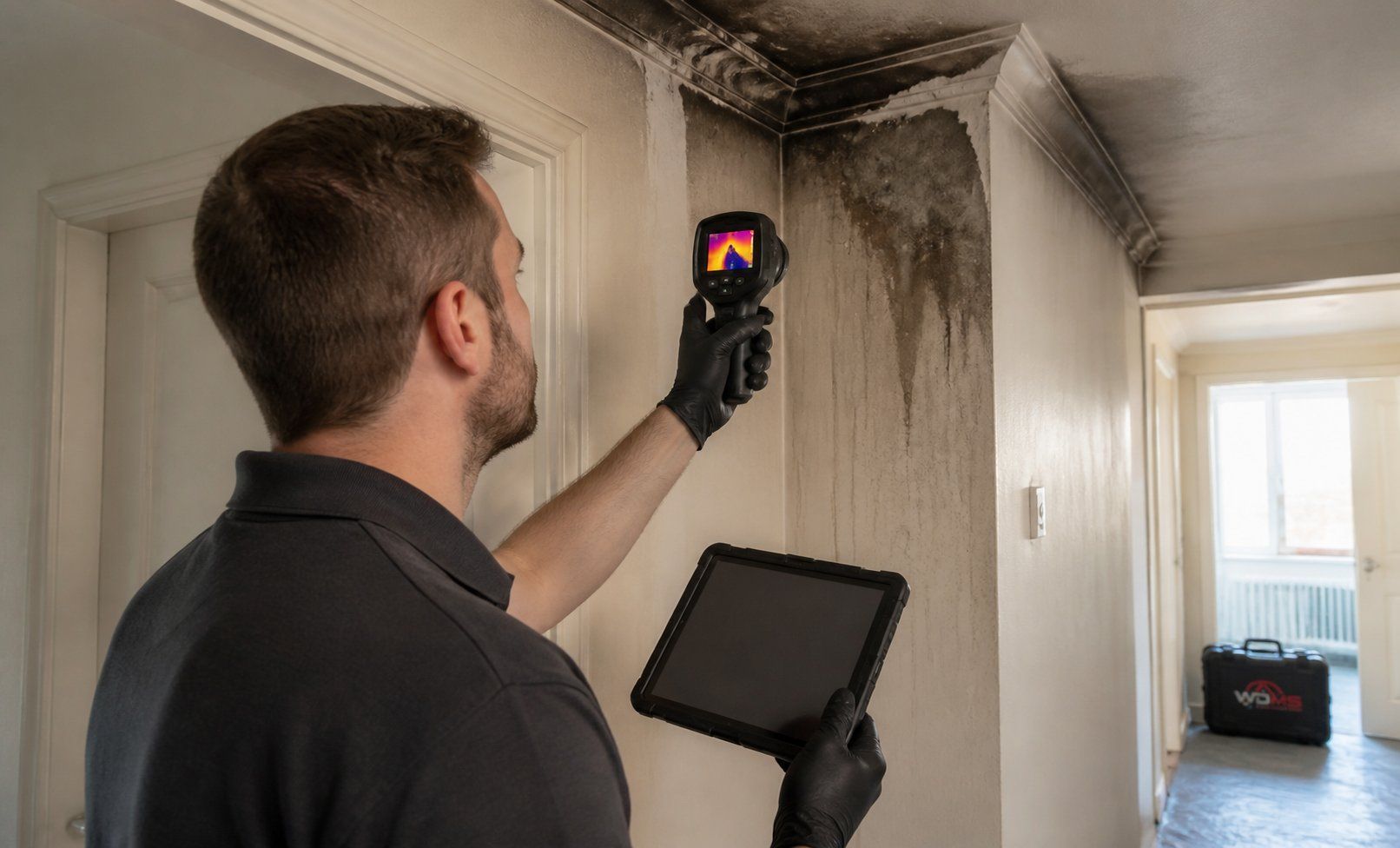
Emergency Make-Safe & Damage Assessment
We assess the affected areas, identify immediate hazards and help establish the scope of the fire damage restoration process before restoration work begins. Where required, damaged areas can be isolated or secured to help reduce the risk of further damage.
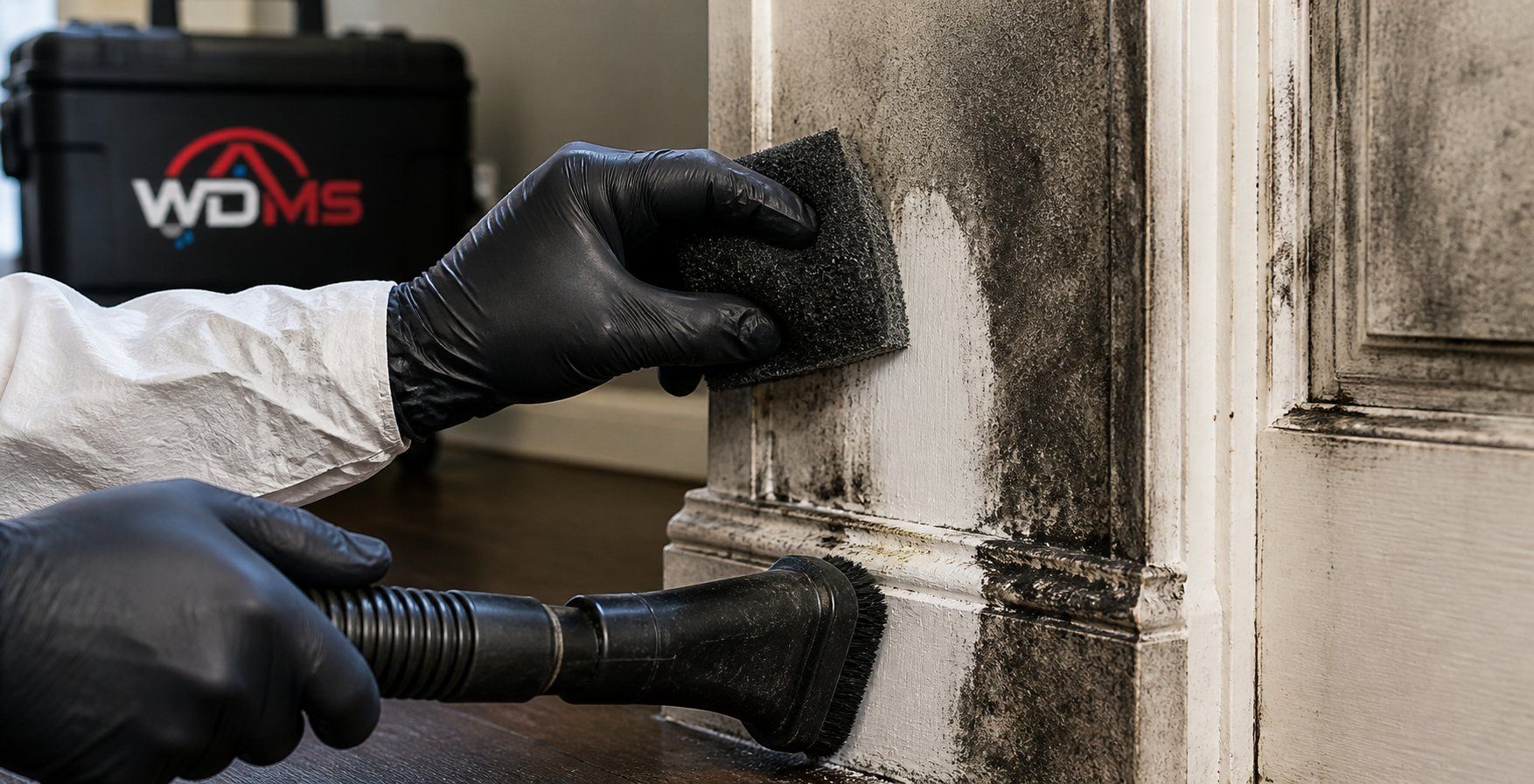
Fire, Smoke & Soot Cleaning
Our fire restoration services include the removal of soot, smoke residue and other fire-related contamination from suitable walls, ceilings, floors and building surfaces. The cleaning method is selected according to the material and type of residue present, because improper cleaning can spread soot or permanently damage affected finishes.
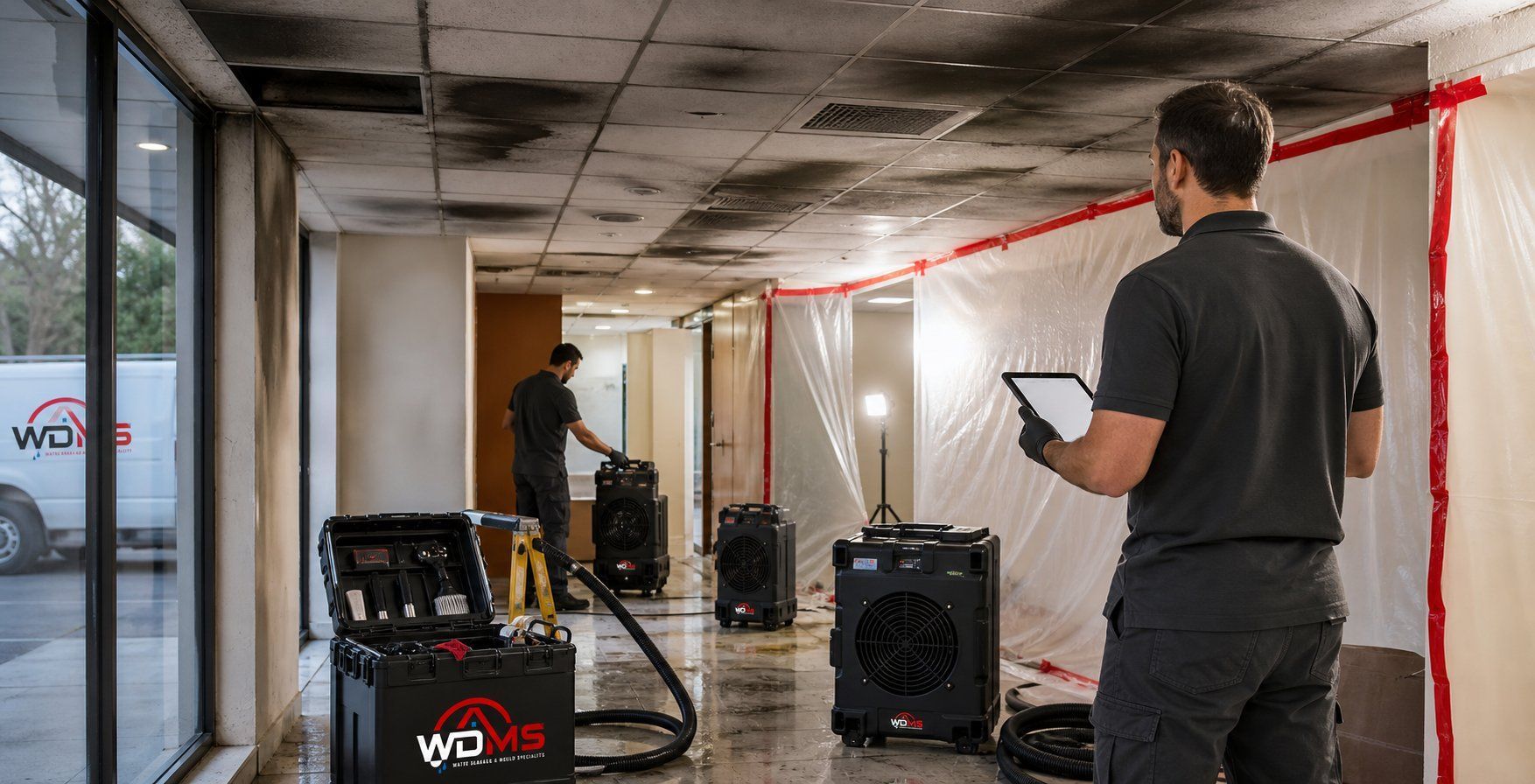
Smoke Damage Restoration
Smoke can move well beyond the room where the fire occurred. Our smoke damage restoration service addresses smoke-affected areas throughout the property, including surfaces, porous materials and concealed spaces where contamination or smoke smell may remain.
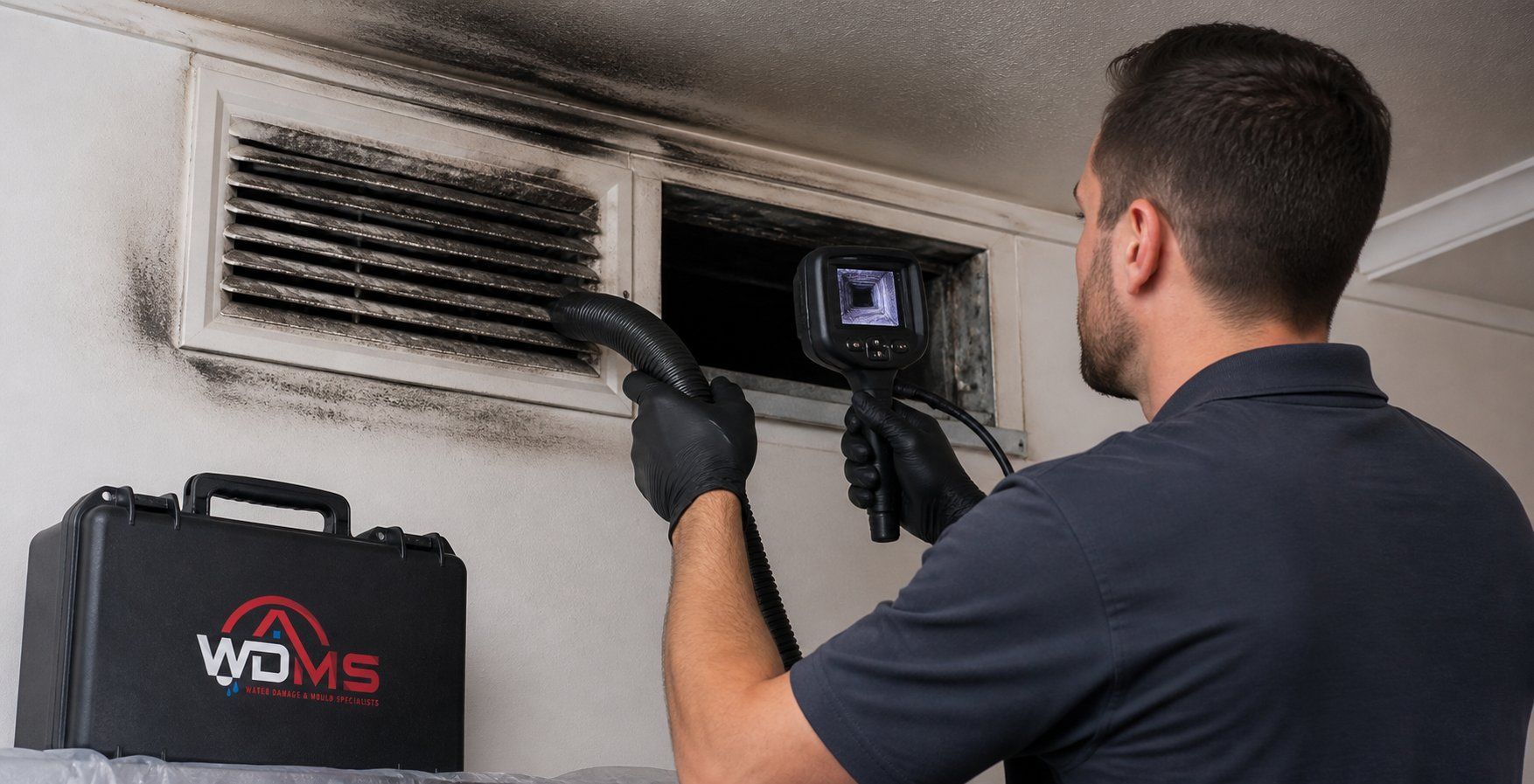
Smoke Odour Treatment
Persistent smoke odours can become absorbed into timber, plasterboard, carpet, furnishings and other porous materials. Effective treatment begins with removing the source of contamination before appropriate odour-control methods are used.
Where suitable, specialist treatments such as ozone treatment may form part of a broader restoration strategy, but only after the property has been assessed and the method is considered appropriate for the site.
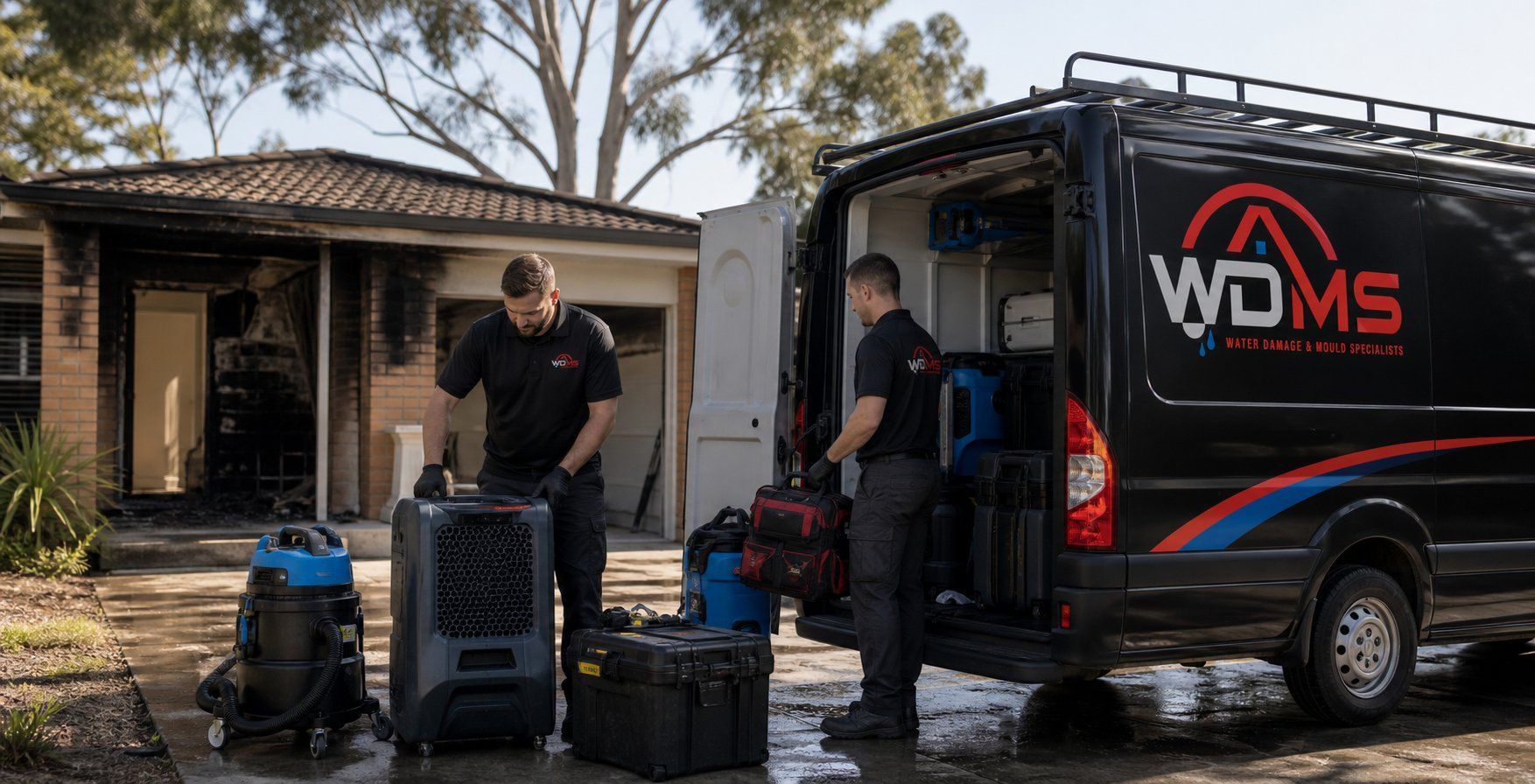
Firefighting Water & Structural Drying
Water used by the fire brigade, sprinkler systems or occupants can create significant secondary water damage after a fire. WDMS can provide water extraction, moisture assessment and structural drying where walls, flooring, insulation or other materials have become saturated.
This combined fire and smoke restoration capability allows both fire-related contamination and water damage to be managed through one coordinated restoration plan.
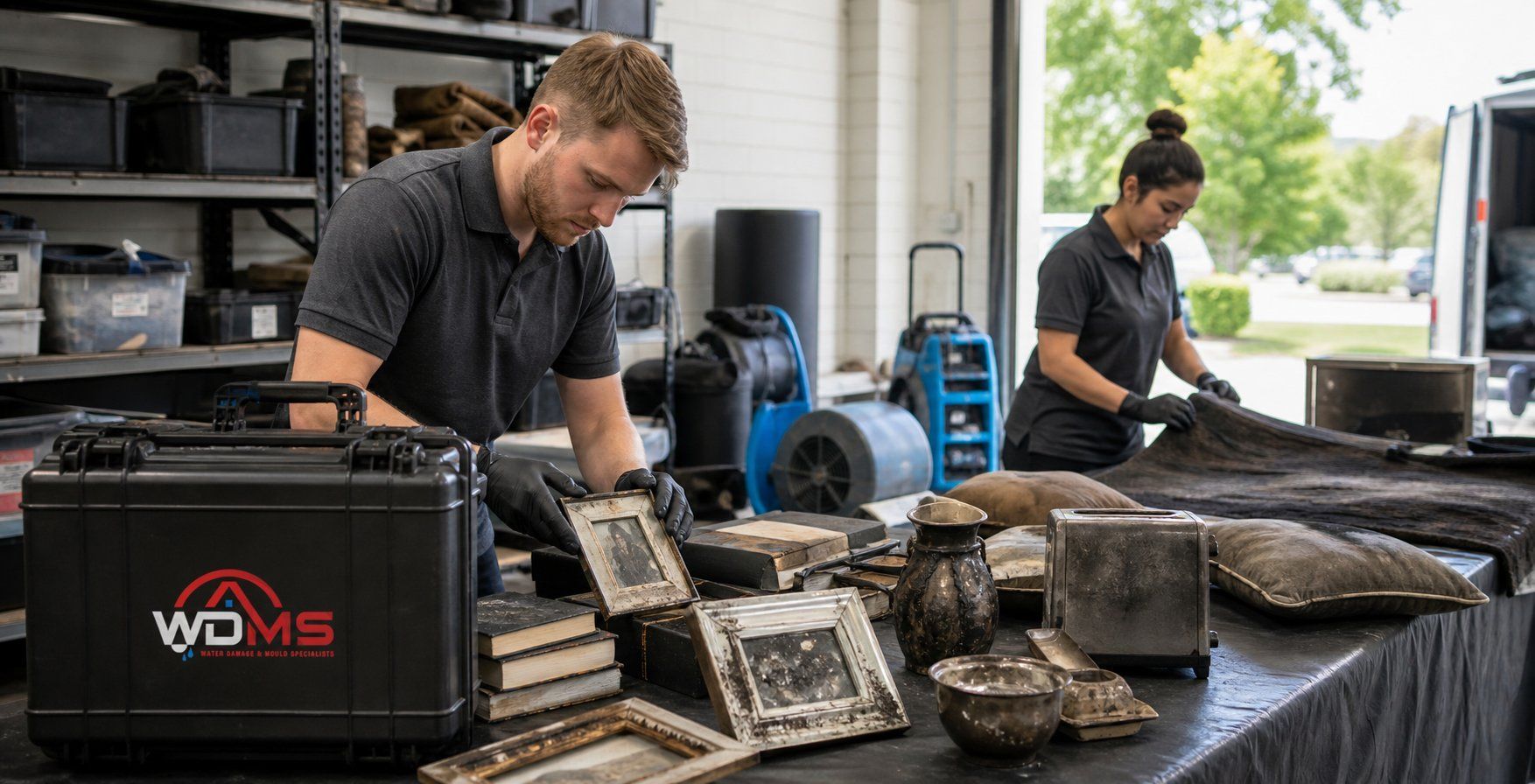
Damaged Material Removal
Some materials cannot be safely or effectively restored. Burnt, heavily contaminated or structurally compromised materials may require controlled removal before repair work can proceed.
Where structural damage is suspected, the affected area should be assessed by the appropriate qualified professional before reconstruction.
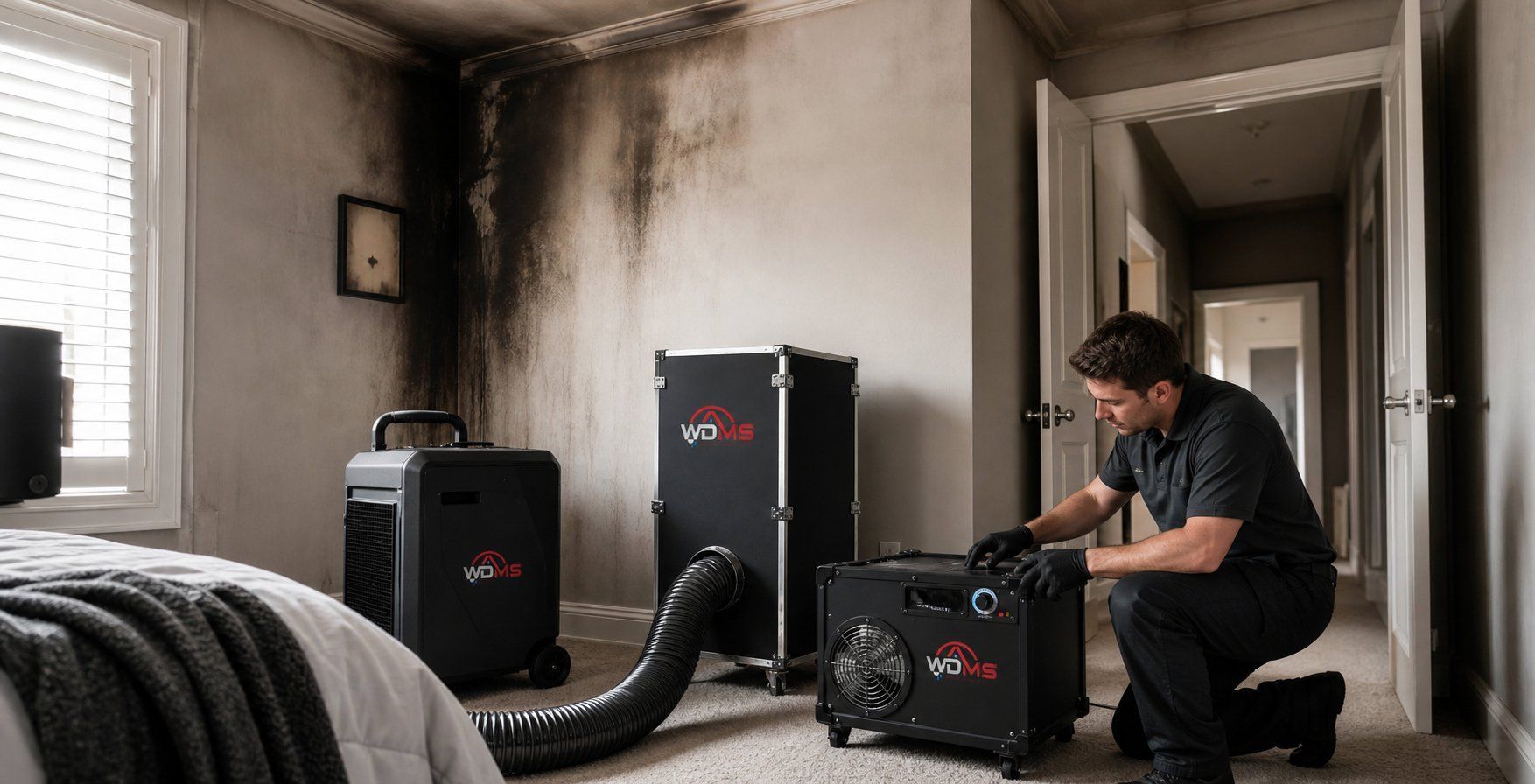
Cleaning, Decontamination & Air Management
Depending on the property, restoration may also include HEPA filtration, detailed cleaning and other methods designed to reduce airborne particles and contamination.
Deodorants alone do not remove the source of smoke contamination or necessarily improve air quality. The priority is to remove soot and residues in an appropriate manner, then apply additional odour-control measures where needed.
Why Professional Fire Restoration Matters
Fire damage is rarely limited to what is immediately visible. Smoke, soot, heat and firefighting water can affect adjoining rooms, concealed cavities, porous materials and building systems long after the fire has been extinguished. Professional restoration helps identify the full extent of the loss and reduce the risk of secondary problems being overlooked.
Smoke Travels Further Than the Flames
Smoke can move through doorways, ventilation paths and ceiling spaces, depositing residue well beyond the room where the fire started.
Soot Can Damage Surfaces
Different types of soot can react differently with paint, metal, timber, glass and other materials. Incorrect or aggressive cleaning may spread contamination or permanently mark sensitive finishes.
Odours Can Become Embedded
Smoke smell can penetrate plasterboard, carpet, timber, furnishings and other porous materials. Effective odour treatment starts with removing the underlying contamination rather than simply masking the smell.
Firefighting Water Creates a Second Problem
Water used by the fire brigade or sprinkler systems may soak walls, floors, insulation and structural materials, making moisture assessment and structural drying an important part of the restoration process.
Hidden Damage Can Be Missed
Fire and smoke residue may remain inside cavities, behind cabinetry or in adjoining areas that appear unaffected at first glance. A structured assessment helps define the actual restoration boundaries.
Documentation Matters
For insurance-related work, clear photographs, assessment records, scopes of work and restoration documentation can help property owners, strata managers, insurers and loss adjusters understand what was affected and what work was required.
Not Sure How Far the Damage Has Spread?
Free Initial Fire & Smoke Damage Assessment With Eligible Approved Work
We’ll assess the affected areas, identify visible fire, smoke, soot and water damage, and explain the recommended next step.
24/7 Emergency Response · Fire + Smoke + Water Restoration · Insurance-Ready Documentation
Our Fire Restoration Process
Every fire-damaged property is different. Our process is designed to assess the full extent of the damage, address immediate risks and move the property through restoration in a clear, coordinated way.
Step 01
Emergency Response & Initial Safety Review
We gather information about the incident, confirm whether the property has been cleared for access and identify any immediate make-safe requirements before restoration work begins.
Step 02
Fire, Smoke & Moisture Assessment
We inspect the affected areas for visible fire damage, soot, smoke residue, odours and water damage caused by firefighting or sprinkler systems. Where required, moisture readings help identify wet materials and hidden water spread.
Step 03
Scope of Work & Documentation
The affected areas are documented and a restoration scope is prepared based on what can potentially be cleaned, dried, restored or removed. For eligible insurance-related work, this may include photographs, moisture records and supporting restoration documentation.
Step 04
Soot, Smoke & Contamination Removal
Suitable surfaces and materials are cleaned using methods appropriate to the type of residue and material affected. Unsalvageable or heavily contaminated materials may be removed where necessary.
Step 05
Odour Treatment & Structural Drying
Once the source residues have been addressed, persistent smoke odours can be treated using appropriate methods. Any firefighting water damage is managed through extraction, dehumidification and monitored structural drying where required.
Step 06
Final Assessment & Restoration Handover
Once the restoration work is complete, the affected areas are reviewed and relevant completion records are prepared. The property can then progress to repairs, reinstatement or reconstruction where required.
Insurance Support & Restoration Documentation
Fire damage claims can involve multiple parties, including homeowners, strata managers, insurers, brokers, loss adjusters and repair contractors. Clear documentation helps everyone understand what was affected, what restoration work was required and how the property progressed through the recovery process.
For eligible projects, WDMS can provide damage photographs, assessment records, moisture readings where firefighting water is involved, scopes of work, progress updates and completion documentation. With your permission, relevant restoration information can also be shared with your nominated insurer, property manager or loss adjuster to help make the process easier to coordinate.
Our documentation may include:
- Initial damage photographs
- Fire, smoke and soot assessment notes
- Moisture readings and drying records
- Scope of restoration work
- Materials removed or treated
- Progress and completion records
- Supporting invoices and job documentation
Insurance coverage, claim approval and reimbursement remain subject to your policy terms and the insurer’s assessment.
Need Help After Fire, Soot or Smoke Damage?
The sooner the affected areas are properly assessed, the easier it is to understand what can be cleaned, restored or may need replacement. Untreated soot damage and improper clean up can contribute to persistent odours, staining and, in some cases, permanent discolouration of affected surfaces.
WDMS provides a reliable restoration service across Sydney, managing the whole process from initial assessment and make-safe work through soot removal, structural drying, odour treatment and insurance-ready documentation. In more extreme cases, specialist odour-control methods such as thermal fogging may be considered where appropriate for the property and restoration plan.
Mould Remediation Sydney: Common Questions
Can you remediate mould yourself?
For small patches under one square metre on non-porous surfaces, careful DIY mould removal is possible using natural agents like white vinegar and proper protective gear. Beyond that, professional mould removal is highly recommended. Larger mould infestations, porous surfaces like plasterboard, and any recurring mould problem need proper containment, HEPA filtration and moisture source correction, which household methods cannot safely provide.
How do you know if your house has toxic mould?
Common signs include dark patches on walls or ceilings, a persistent musty smell, condensation on windows, and health symptoms like coughs, allergies or a stuffy nose that clear when you leave the property. Confirming whether the mould is toxic requires a professional mould inspection with air quality analysis. We assess visible signs, take moisture readings, and identify the specific extent of the contamination.
How do you get rid of mould permanently?
Permanent removal means treating the moisture source, not just the surface. Effective mould remediation involves identifying and correcting where the moisture is coming from, whether that's a water leak, condensation, or inadequate ventilation. Physical removal, HEPA vacuuming, proper drying and prevention planning together aim for permanent removal lasting over 12 months.
Is mould remediation a good idea?
Yes, especially for any mould affected area larger than one square metre, mould that keeps returning, or households with children, elderly members, or anyone with compromised immune systems. Professional remediation addresses health risks, structural damage, and property value in one process, which is why property managers and insurers consistently recommend it.
How do you remove mould yourself?
For a small area, wear PPE including a P2 mask and gloves, ventilate the space, and use damp cloths rather than dry scrubbing so mould spores do not spread. White vinegar works on hard surfaces. Bleach is not suitable for porous surfaces. Dispose of contaminated cloths in a sealed bag. If the mould covers more than one square metre or returns after cleaning, stop and call a professional mould remediation company.
What permanently kills mould?
No single product permanently kills mould, because mould is a symptom of moisture. Antimicrobial treatments and HEPA vacuuming handle the immediate mould, but permanent removal requires correcting the moisture cause. Repairing affected areas, fixing plumbing leaks, improving ventilation, and keeping humidity below 60% are what actually stop mould returning long-term.
How do you get rid of black mould?
Black mould needs professional handling because of the health risks and structural spread. Our process starts with a mould inspection to confirm the extent, followed by full containment, HEPA air filtration, physical removal using eco-friendly treatments, structural drying and moisture source correction. For black mould in bathrooms, ceilings or wall cavities, DIY methods are not safe, and professional help is the right next step.
How long does mould remediation take?
Most residential mould remediation projects take a couple of hours to a couple of days, depending on the extent of the mould infestation, the size of the affected areas, and whether structural drying is required. Larger commercial jobs can take several days. Accurate timing follows the initial inspection report.
How much does mould remediation cost in Sydney?
Costs depend on the size of the mould affected area, the location of the mould growth, and whether specialised services like air quality analysis or structural drying are included. Every quote follows a detailed inspection so pricing reflects the actual scope. We provide transparent, written quotes with no hidden extras.
Need Help After Fire, Soot or Smoke Damage?
The sooner the affected areas are properly assessed, the easier it is to understand what can be cleaned, restored or may need replacement. Untreated soot damage and improper clean up can contribute to persistent odours, staining and, in some cases, permanent discolouration of affected surfaces.
WDMS provides a reliable restoration service across Sydney, managing the whole process from initial assessment and make-safe work through soot removal, structural drying, odour treatment and insurance-ready documentation. In more extreme cases, specialist odour-control methods such as thermal fogging may be considered where appropriate for the property and restoration plan.
The Sooner We Start, The Sooner You Trade Again
24/7 Emergency Response · Fire + Smoke + Water Restoration · Insurance-Ready Documentation