
Mould Inspection & Testing Sydney
Spotted mould in the bathroom, or noticed a musty smell that won't shift? What you see on the surface is usually a fraction of what's actually growing behind it. Water Damage & Mould Specialists runs Sydney's certified mould inspection and testing service.
Every job is led by an IICRC-Certified Water Damage Restoration Technician and backed by NATA accredited laboratory analysis. You walk away with a detailed report you can actually use, whether the next step is remediation, an insurance claim, or a straight answer on whether your home is safe.
IICRC-Certified Water Damage Restoration Technician
NATA Accredited Laboratory Analysis
Thermal Imaging & Advanced Moisture Detection
Air Sampling, Surface Sampling & Bulk Sampling
Insurance-Ready Detailed Report Included
24/7 Emergency Response Across Sydney
IICRC-Certified. NATA-Backed Lab Analysis. Sydney’s Trusted Diagnostic Team.
IICRC-Certified Water Damage Restoration Technician
NATA Accredited Laboratory Analysis
Thermal Imaging & Advanced Moisture Detection
Air Sampling, Surface Sampling & Bulk Sampling
Insurance-Ready Detailed Report Included
24/7 Emergency Response Across Sydney
Sydney's Trusted Team For Certified Mould Inspection & Testing
Sydney sits in a climate that quietly rewards mould. Coastal humidity stays above 60% most of the year. Autumn rain drives moisture behind cladding and gutters. Winter condensation settles on cold walls overnight. That mix is exactly what mould needs to spread. It is why Australian homes across the city keep dealing with the same problem year after year, from Bondi terraces and Manly units through to Parramatta apartments and Inner West cottages.
Water Damage & Mould Specialists delivers professional mould inspection services across Sydney for residential, strata and commercial properties. Every job runs through a controlled diagnostic process. We inspect for visible mould, hidden mould, moisture problems and building materials. Where the situation calls for it, we confirm findings through air sampling, surface sampling and NATA lab analysis. The IICRC certification behind our work sets the standard for every reading, every sample and every recommendation on your property.
We do more than tell you mould is present. We identify potential causes and locate contamination behind walls. Then we hand back a detailed report that stands up to insurance scrutiny and independent review. That is how a proper mould inspection company should operate, and it is how we have earned trust with property managers, insurers and homeowners across the city.
Book your inspection today and get real answers about what is happening in your Sydney property.
GET AN INSTANT FREE QUOTE!
Contact Us
We will get back to you as soon as possible.
Please try again later.
Why A Mould Inspection Matters: Health Risks, Hidden Damage And Indoor Air Quality
A stain on the ceiling or wall is a symptom, not a diagnosis. Behind it, airborne mould spores drift through the indoor air of your home. Hidden mould feeds quietly on damp building materials inside wall cavities, subfloors and ceiling spaces. For children, elderly residents, pregnant women and anyone with a weakened immune system, that exposure carries serious health risks. It shows up as coughing, sinus irritation and worsening asthma. Respiratory issues linger and never quite lift.
Black mould, or Stachybotrys chartarum, releases toxic spores that spread well beyond the room they started in. Those spores push indoor air quality across the whole home downhill. Of the 100,000-plus mould species worldwide, only 20 to 30 regularly appear inside Australian homes, arriving in white, pink, green and black. While all of this plays out, the structure quietly suffers too. Plasterboard swells, timber softens, and a small moisture problem turns into costly repairs that stretch far beyond the original leak. A professional inspection stops the guesswork early. That protects the property and your family's health before either pays a heavier price.
Get Certainty Before the Damage
Stop wondering what's behind the wall. Get a certified answer before the damage, or the health toll, stacks up.
Why Sydney Trusts WDMS For Certified Mould Inspections
Anyone can quote a mould inspection. Very few can hand back a report that holds up in front of an insurer, a strata committee or a tribunal. Here is what we build into every job across the city.
IICRC-Certified Expertise
Every inspection is led by an IICRC-Certified Water Damage Restoration Technician. The role covers moisture assessment, mould identification and structural drying. That certification is the industry benchmark, and it puts a qualified set of eyes on the property from the first knock on the door.
NATA Accredited Laboratory Analysis
Every sample we collect on site is processed through a NATA accredited laboratory. The lab counts spore levels and identifies specific mould species including Stachybotrys chartarum. Your indoor readings are then separated from the outdoor air baseline for a clean comparison. The result is data insurers, regulators and tribunals recognise as legitimate.
Advanced Detection Technology
Calibrated moisture meters, thermal imaging cameras and Air-O-Cell sampling cassettes give us readings a household check simply cannot produce. Thermal imaging highlights cold spots behind walls long before mould growth turns visible. Moisture mapping tracks dampness across whole rooms in a single sweep.
Insurance-Ready Documentation
Every inspection report includes photographs of affected areas, moisture readings, lab-verified sample results and a clear scope of findings. That format is exactly what your insurer, broker, loss adjuster or property manager needs to move an insurance claim forward. Two-page summaries only raise more questions than they answer.
Straight Findings Backed By Real Evidence
Our job is simple. We tell you what the property is actually doing. If the situation calls for light mould cleaning rather than full remediation, the report says so in plain language. Property managers and homeowners keep booking us back. The recommendations always line up with what the sampling and moisture readings actually show.
Around-The-Clock Response Across Sydney
Water damage does not wait for business hours, and neither do we. Our team is on call day and night for burst pipes, storm ingress, active flooding and urgent mould concerns. We cover Bondi, the Northern Beaches, Parramatta, the Inner West and every suburb in between.
Signs You May Need a Mould Inspection
Visible Mould
Mould appears on walls, ceilings, bathrooms, kitchens or laundries.
Recurring Mould
Growth returns after cleaning or using supermarket sprays.
Musty Odours
A persistent damp smell may indicate hidden moisture or microbial growth.
Recent Water Damage
The property has experienced a leak, flood, burst pipe or stormwater intrusion.
Dampness or Staining
You notice bubbling paint, discolouration, swollen skirting or unexplained moisture.
Condensation Problems
Windows, walls or ceilings regularly collect condensation.
Suspected Hidden Mould
You are concerned about mould behind walls, under floors, above ceilings or in the subfloor.
Indoor Health Concerns
Occupants experience irritation or allergy-like symptoms mainly while inside the property. These symptoms do not confirm mould and should be discussed with a healthcare professional.
Property or Insurance Concerns
You need clearer documentation for a purchase, rental, strata or insurance matter.
Replace Guesswork With Clear Findings
A professional mould inspection helps identify visible growth, moisture conditions and likely contributing factors so you can understand the right next step.
Mould Inspection Packages For Sydney Properties
The right inspection depends less on how big your property is and more on why you picked up the phone. Someone dealing with a visible mould patch after a leak needs something very different. So does a buyer wanting a pre-purchase report or a strata manager facing an insurance claim. Here is how we structure the work.
A Note on Pricing
Inspection fees reflect the size of the property, the number of samples collected and whether laboratory testing forms part of the scope. Every quote follows a short conversation about what triggered the inspection, so the number you receive lines up with the actual job.
Standard Report
Property Mould Inspection
For homes or offices with visible mould, a persistent musty smell, or a recent leak. Includes a full walk-through, moisture readings and a written report you can act on.
- Full property visual inspection
- Moisture readings using professional-grade meters
- Thermal imaging where appropriate
- Written report with clear next steps
Best for homeowners and property managers wanting fast clarity before any treatment begins.
Health Or Hidden Mould Concern
Diagnostic Inspection With Lab Testing
For properties with hidden mould, ongoing health concerns or an unclear moisture source. Combines the full inspection with on-site sampling and NATA lab analysis for real evidence.
- Everything in the visual inspection
- Air sampling using Air-O-Cell or Allergenco-D cassettes
- Surface sampling by biotape or surface swab
- Bulk sampling of affected building materials where required
- Lab analysis by a NATA accredited laboratory
- Detailed report on species and contamination
Best for households, landlords and buyers who need real evidence rather than opinion.
Insurance, Strata Or Legal Use
Expert Report For Insurance & Legal Use
For commercial sites, strata disputes, complex water damage claims and cases heading to tribunal. Delivers the depth your insurer, broker or occupational hygienist needs on the desk.
- Multi-room and multi-level thorough inspection
- Extensive air sampling and bulk sampling
- Moisture mapping of subfloors, wall cavities and roof spaces
- Occupational hygienist involvement where required
- Detailed analysis and expert-level report ready for legal or insurance use
Best for strata managers, commercial operators and property managers dealing with large-scale contamination.
Professional Support for Every Type of Property
Sydney Properties We Inspect Every Week
Every property type asks a different question. A parent worries about a child's health. A strata committee wants to know whose insurance covers the leak. A commercial landlord needs the site running by Monday. Our inspection approach shifts with the reason behind the call.

Residential Properties
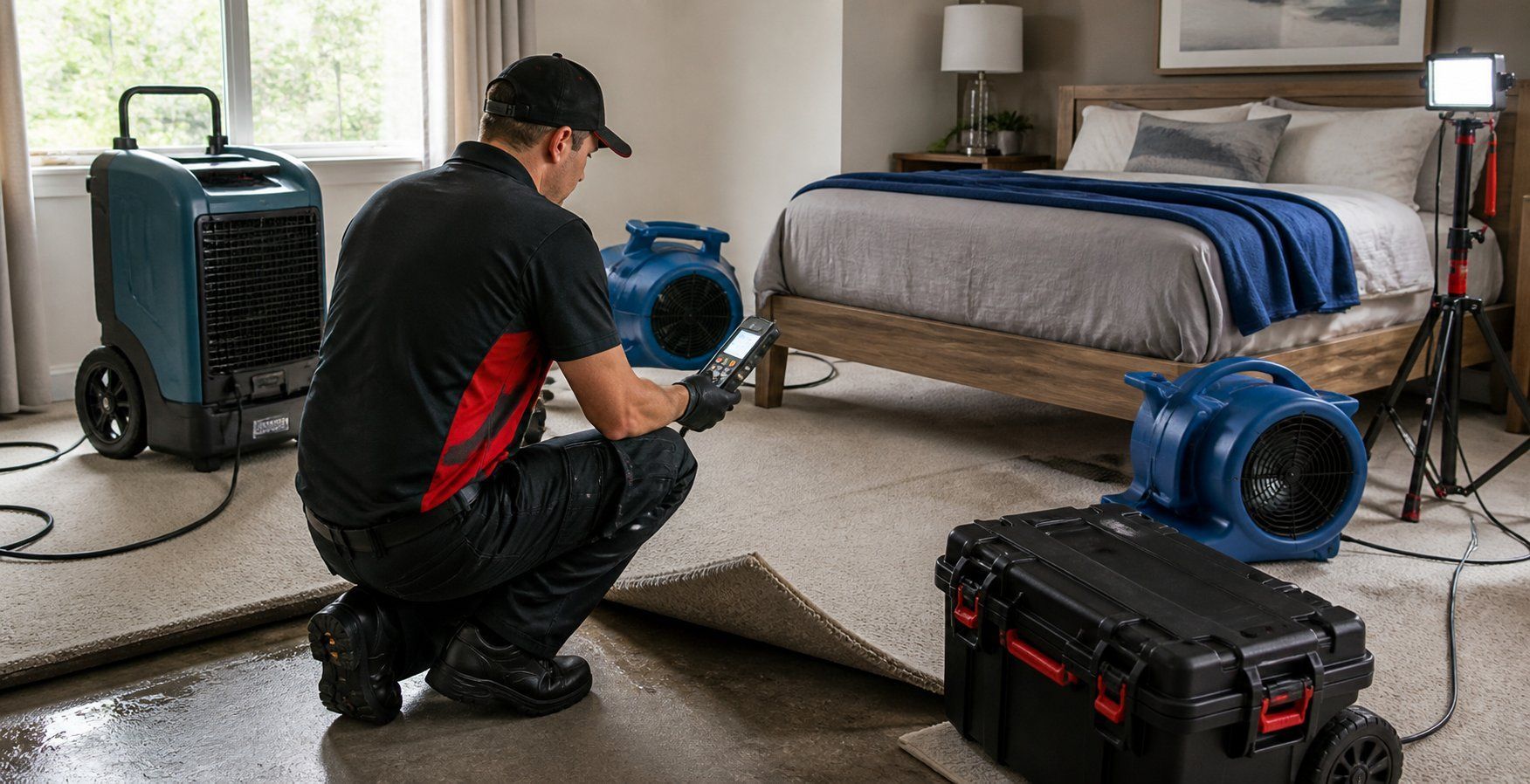
Residential calls usually start with a musty smell, a child's cough or a dark patch behind the wardrobe. We track down where mould actually forms in Sydney homes and explain the findings in plain language.
Strata & Apartment Buildings
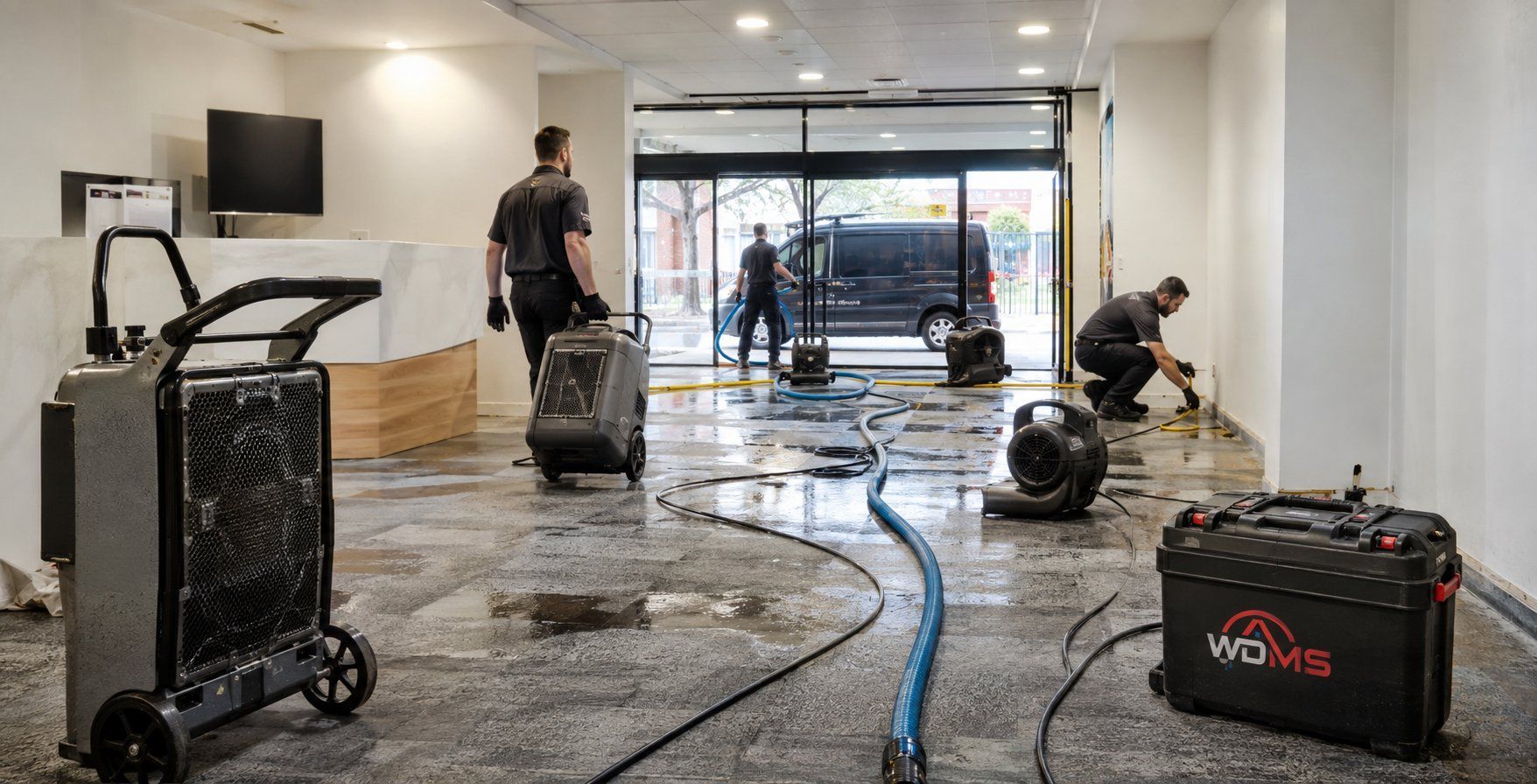
Apartment inspections come down to one question: is this a lot owner issue or a common property issue? Our report documents what we found, where it came from, and which party carries the responsibility.
Commercial Properties
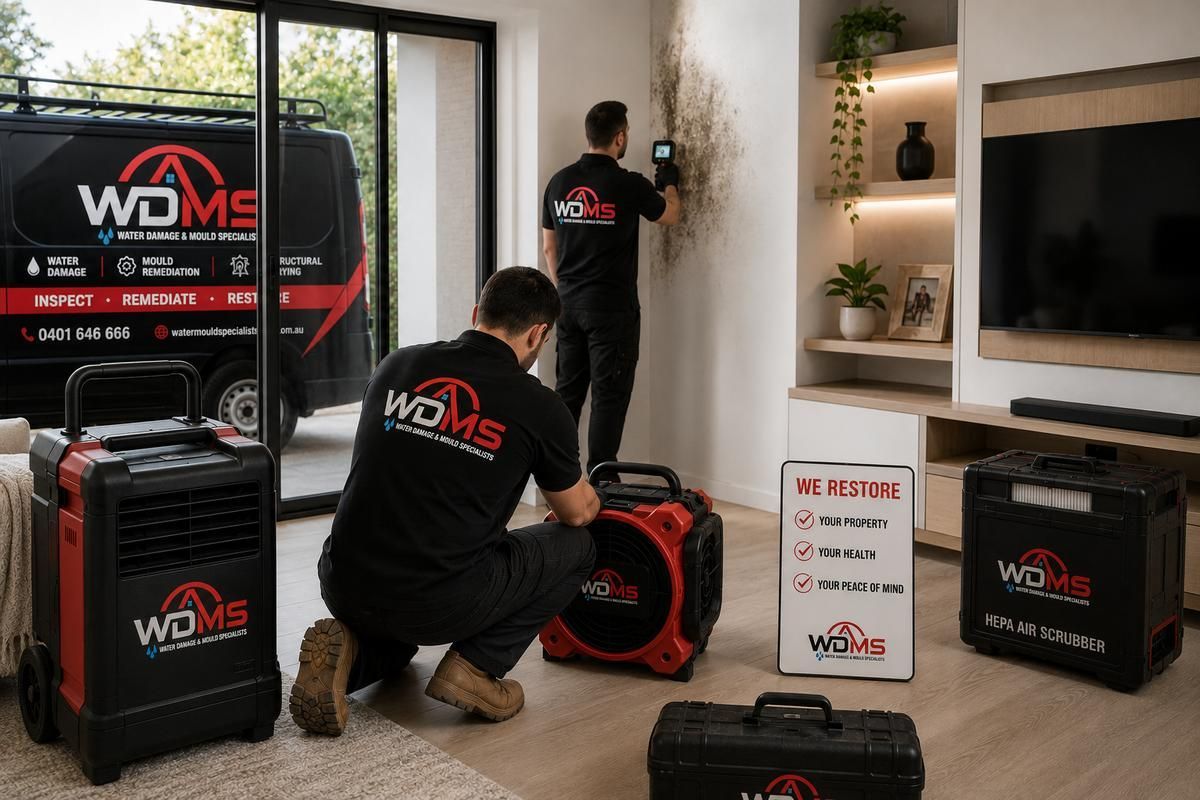
Commercial inspections usually follow staff complaints or a WHS trigger. We work across offices, retail floors, kitchens and HVAC-adjacent areas without disrupting trade, then report in a format insurers and landlords accept.
Pre-Purchase Mould Inspection
Sydney's market moves fast and mould rarely announces itself before an open home. A pre-purchase inspection catches hidden moisture, active mould growth and structural damage inside your cooling-off period, before you sign anything.
Rental & Investment Properties
Rental inspections often follow a tenant complaint, an NCAT notice or an insurance query. Landlords, agents and property managers receive an independent report that separates tenant-caused moisture from structural defects clearly.
From First Call To Final Report: Our Mould Inspection Process
An effective mould assessment follows a proven sequence, with each step feeding the next. This is how a job runs from your first call through to the final report landing in your inbox.
Step 01
Initial Call And Booking
You describe what you are seeing, smelling or worrying about. We ask the right questions about recent water damage, ventilation, visible growth and health effects, then book the inspection at a time that suits you.
Step 02
On-Site Visual Inspection
A trained professional arrives, walks the whole property, and documents visible mould, moisture staining, water damage signs and any conditions that could support mould growth. Photographs are taken throughout for the report.
Step 03
Moisture & Thermal Mapping
Professional moisture meters read walls, floors, subfloors and structural materials. Thermal imaging cameras identify cold spots that flag hidden moisture inside wall cavities and ceiling spaces. Together, these tools identify potential causes without opening the structure unnecessarily.
Step 04
Air, Surface & Bulk Sampling
Where testing is warranted, we collect airborne mould samples using Air-O-Cell cassettes, outdoor air control samples for baseline comparison, and surface samples via biotape or surface swab. Bulk sampling of affected building materials follows for stubborn cases. Agar plates and other lab methods come into play for specific mould species where deeper analysis is required.
Step 05
NATA Lab Analysis
Samples travel to a NATA accredited laboratory. The lab analysis confirms spore levels, identifies dominant species including Stachybotrys chartarum where present, and separates indoor readings from outdoor air baselines. This is the scientific backbone of your report.
Step 06
Your Final Report
Within days of the inspection, you receive a detailed report covering findings, photographs, moisture readings and sample results. It also outlines identified moisture sources and a clear remediation scope where treatment is required. Everything an insurer, property manager or occupational hygienist could reasonably ask for is already there.
The Diagnostic Equipment That Actually Finds Mould
Every finding in your inspection report traces back to a piece of calibrated equipment used on site. This is the kit we carry, and what each piece actually does when we walk through your property.
- Calibrated Moisture Meters measure moisture inside walls, floors and structural materials for readings backed by real numbers.
- Thermal Imaging Cameras flag cold spots and hidden dampness behind surfaces before visible growth ever appears.
- Air-O-Cell & Allergenco-D Sampling Cassettes capture airborne mould spores from indoor air, with matched outdoor samples run as a control.
- Biotape & Surface Swab Kits lift a physical sample directly from visible growth for laboratory identification.
- Bulk Sampling Kits remove sections of affected building materials for lab work when air and surface sampling fall short.
- Agar Plates & Culture Media support species-specific testing at the NATA accredited laboratory, especially where Stachybotrys chartarum is suspected.
- Digital Humidity & Temperature Loggers record indoor conditions over hours or days for chronic moisture problems and difficult diagnostics.
Every reading is time-stamped. Every sample is chain-of-custody tracked from the site to the lab. Every result lands in the same detailed report you receive at the end of the job.
Basic Mould Check vs Professional Mould Inspection
A supermarket spray, a torch and a phone camera might tell you mould is present. A professional inspection tells you what species it is, why it is there, and what has to happen next. The difference shows up in the report and in the insurance claim outcome. It also decides whether the mould comes back six weeks later.
| Basic Mould Check | Professional Mould Inspection |
|---|---|
| Spots visible surface mould only | Assesses visible mould, hidden mould and airborne mould spores |
| Relies on what the eye can see | Uses moisture meters, thermal imaging and calibrated sampling |
| No lab confirmation | NATA accredited laboratory analysis of every sample |
| Guesses at the moisture source | Identifies potential causes with moisture mapping |
| Cannot support an insurance claim | Delivers insurance-ready detailed report |
| Often misses black mould inside wall cavities | Detects Stachybotrys chartarum and other specific mould species |
| Leads to repeat cleaning and costly repairs | Prevents mould growth returning and protects building materials |
Mould Inspection & Testing Sydney: Common Questions
How do you test for mould in your home?
Testing for mould combines a visual inspection with moisture readings and, where warranted, air and surface sampling. A trained professional walks the property and documents visible growth. Moisture meters and thermal imaging locate hidden dampness, and samples then travel to a NATA accredited laboratory. That process identifies which species are present and how heavy the contamination is, giving you real evidence rather than assumption.
How can I test for mould in my house?
DIY test kits sold at hardware stores can flag whether mould is present. They cannot tell you where it is coming from, what species is growing, or how serious the risk is. Household mould that keeps returning, sits inside wall cavities, or causes health effects needs a proper answer. A professional mould inspection is the reliable one. It combines visual assessment, moisture mapping, air sampling and lab analysis in one job.
What are the signs of mould sickness?
Common symptoms include a persistent cough, sinus congestion, sore throat and itchy or watering eyes. Skin irritation, worsening asthma, tiredness and headaches that lift when you leave are also typical. Children, the elderly and anyone with a weakened immune system tend to react first and hardest. If the symptoms match the pattern and you suspect mould in the house, book an inspection. Waiting only stretches the health effects over longer periods.
How much does a mould inspection cost in Australia?
Mould inspection costs across Australia usually start around $300 for a basic visual inspection. They rise to $1,500 or more for a comprehensive commercial or legal-standard assessment. In Sydney, a professional inspection with air sampling and NATA lab analysis often falls between $600 and $1,200. The final figure depends on property size, sample count and travel. Every quote should follow a short site conversation so pricing reflects the actual scope.
How do you know if your house has toxic mould?
Warning signs include dark black or greenish patches on walls, ceilings or in bathrooms. A heavy musty smell, condensation on windows and household members feeling unwell inside are also common. Confirming toxic mould, particularly Stachybotrys chartarum, requires a professional mould inspection with lab analysis. Visual signs alone are never enough because several harmless species also look dark.
Is professional mould removal worth it?
Professional mould removal is worth the investment for any affected area larger than one square metre, mould that keeps returning, or vulnerable households. That includes children, elderly members and anyone with a weakened immune system. Surface cleaning masks the problem for a few weeks before growth returns. Professional remediation treats the moisture source and contains the affected areas. That reduces the risk of costly repairs down the track.
How long does a mould inspection take?
A standard residential mould inspection takes around two hours on site. Larger properties, commercial buildings and jobs with extensive air or bulk sampling take longer. Lab analysis and report writing add further time, with the final detailed report usually delivered within a few working days of the site visit.
Do I need a mould inspection before buying a property in Sydney?
A pre-purchase mould inspection is one of the smartest checks you can do before signing on a Sydney home. Sydney's humid climate and older building design create ideal conditions for hidden mould. Buyers rarely spot the risks during a standard open home. An inspection identifies mould contamination, moisture problems and structural damage before the property is legally yours.
Need A Mould Inspection Report That Actually Holds Up?
One inspection changes what you actually know. Instead, you stop guessing whether the patch behind the wardrobe matters. Or whether the musty smell in the kids' room is worth worrying about. You get a report built from calibrated readings, NATA-verified lab results and an IICRC-certified opinion.
Water Damage & Mould Specialists brings that certainty to homes, strata buildings and commercial sites right across Sydney. Your report might close the case with a light clean, open the door to full mould remediation, or back an insurance claim already in motion. Either way, the next move belongs to you.
Lock In Your Sydney Mould Inspection Before The Damage Spreads Further
Send us your photos, tell us what you are seeing, and book a time that suits the property. The earlier the report lands in your inbox, the more options stay open. That runs from a straightforward clean through to a full remediation supported by your insurer.
24/7 Emergency Response
● IICRC-Certified Technician
● NATA Accredited Lab Analysis
● Insurance-Ready Reporting
Why Book With Water Damage & Mould Specialists?
- IICRC-Certified Water Damage Restoration Technician
- NATA Accredited Laboratory Analysis
- Thermal Imaging & Advanced Moisture Detection
- Insurance-Ready Detailed Report Included
- 24/7 Emergency Response Across Sydney
- Trusted By Homeowners, Property Managers And Strata Committees