Sewage Damage Cleanup Services Sydney
Sewage inside a property is a biohazard, and every hour it sits raises the health risk, the repair bill, and the chance of long term damage. Water Damage & Mould Specialists delivers professional sewage damage cleanup services across Sydney for homeowners, strata managers and commercial operators who need the job handled safely the first time. Our certified technicians run every callout under AS-IICRC S500 protocols, so the outcome is clean, sanitised and documented for your insurer.
IICRC-Certified Water Damage Restoration Technician
24/7 Emergency Response Across Sydney
Hospital-Grade Disinfectants & Full PPE Compliance
AS-IICRC S500 Compliant Cleanup Process
Free Moisture Assessment On Approved Work
Insurance-Ready Documentation Trusted By Major Australian Insurers
Fast Emergency Response. Hospital-Grade Sanitisation. Documentation Your Insurer Accepts.
IICRC-Certified Water Damage Restoration Technician
24/7 Emergency Response Across Sydney
Hospital-Grade Disinfectants & Full PPE Compliance
AS-IICRC S500 Compliant Cleanup Process
Free Moisture Assessment On Approved Work
Insurance-Ready Documentation Trusted By Major Australian Insurers
Sydney's Certified Team For Sewage Damage Restoration
Sewage cleanup jobs across Sydney rarely fail because the water was too dirty. They fail because the first team ran carpet fans across a black water spill, missed the porous materials underneath, and left the harmful bacteria to keep working inside the walls, floors and subfloor. Weeks later, the same property owner is paying twice for a job that should have been done properly once.
Water Damage & Mould Specialists exists to close that gap. Every sewage callout is led by an IICRC-Certified Water Damage Restoration Technician working to the AS-IICRC S500 standard, the benchmark major Australian insurers use to assess sewage damage restoration claims. The team arrives in full PPE, maps the affected areas with thermal imaging and calibrated moisture meters, and follows a documented sequence from containment through sanitisation to structural drying.
That certified process covers the entire Sydney metro. Family homes in the Eastern Suburbs, strata blocks in the Inner West, retail floors in Parramatta, warehouses in Western Sydney. One certified team, one documented process, one water damage restoration services standard on every job.
GET AN INSTANT FREE QUOTE!
Contact Us
We will get back to you as soon as possible.
Please try again later.
The 24-Hour Window Where Black Water Turns Dangerous
Sewage water carries harmful bacteria, viruses and parasites that create potential health risks the moment anyone comes into contact with it. That list includes E. coli, Salmonella, Hepatitis A and gastroenteritis pathogens. Direct skin contact, inhaled aerosols and cross-contamination across affected surfaces all count as exposure.
Symptoms from sewage exposure can appear within hours for some pathogens, and within 1 to 3 days for others. Children, elderly residents and anyone with a weakened immune system carry the highest risk. Because black water contamination sits deep in porous materials like carpets, plasterboard and skirting boards, the exposure keeps happening long after the visible mess is gone.
Mould growth is the second timer running against you. Once spores land on damp surfaces and humidity climbs, mould can start developing inside 24 to 48 hours. Left long enough, mildew growth turns a contained sewage overflow into a full mould remediation job across multiple rooms.
Immediate action prevents further harm. Keeping people and pets clear of the affected areas, avoiding electrical hazards near contaminated water, and calling a water damage specialist as soon as the spill is discovered are the fastest ways to protect health and reduce the extent of damage.
Sewage Sitting In Your Property? Every Hour Increases The Risk.
Get Sydney's certified sewage cleanup team on-site with the equipment, the disinfectants and the report your insurer expects.
Why Sydney Property Owners Choose WDMS For Complete Damage Restoration
Any operator can drop a mop into a sewage spill. Very few can hand your insurer a compliant report on the first submission, prove the affected floors are dry to reference readings, and confirm the disinfection killed the contaminants the standard actually names. Here is how quality service looks in practice.
IICRC-Certified Technicians
Every sewage job runs under an IICRC-Certified Water Damage Restoration Technician. IICRC is the leading global authority for cleaning and restoration certification, and its S500 protocol drives our assessment, containment, sanitisation and sign-off decisions on every job.
AS-IICRC S500 Standard
We use advanced technology, including thermal imaging and professional moisture meters, to identify visible and hidden moisture before the mould remediation plan is confirmed. This step is included free with approved work, because guessing at hidden dampness is how mould returns within weeks.
Hospital-Grade Disinfectants Applied To Standard
Sewage carries pathogens ordinary household products cannot handle safely. Our team applies hospital-grade disinfectants across affected surfaces, matched to the contamination category and the material we are treating. That chemistry effectively removes the biological risk instead of masking it.
Restoration-Grade Drying Equipment
Sanitising a wet room without drying the structure invites mould growth back within days. Our vans roll with industrial air movers, commercial dehumidifiers, HEPA air scrubbers and thermal imaging cameras, so the drying equipment starts working the same visit and every reading is logged.
Hands On Experience Across Every Sydney Sewage Event
Toilet overflows, blocked sewer lines, storm-driven backups and burst pipe contamination all look different on arrival. Our experienced team has hands on experience across all of them, so the scope on day one is built from what actually works, not a generic template.
24/7 Emergency Response From Local Experts
Sewage does not wait for business hours. Our vans stay stocked across the Sydney metro, so weekend, storm night and public holiday calls reach a trained technician, not a diverted call centre. Local experts, on the road, ready to assist.
Sewage Situations Our Experienced Team Handles Across Sydney
Sewage rarely arrives on a schedule. Sometimes a single blocked line pushes waste across a bathroom floor inside minutes. Other times a tree root has been quietly cracking a pipe for months before anything shows on the surface. Across the Sydney metro, from Bondi apartments to warehouses in Blacktown, the causes below are the ones our crew handles most often.
Toilet & Bathroom Overflows
Blocked pipes and full cisterns pushing contaminated water across bathroom floors and into adjoining rooms.
Sewer Line Backups
Blocked main lines and aging pipes forcing sewage back up through fixtures, floor drains and gully traps.
Burst Pipe Contamination
Failed sewer pipes and drain connections releasing waste inside walls, cavities and subfloor spaces.
Tree Root Intrusion Blockages
Root growth cracking sewer lines and causing repeated overflow events across the property.
Heavy Rainfall & Municipal Sewer Overload
East Coast Lows and heavy storms overwhelming the sewer system and pushing wastewater backward into homes.
Basement & Garage Sewage Flooding
Low-level flooding from combined stormwater and sewer overload during heavy rain events.
Contaminated Flood Water Events
Floodwater mixed with sewage, mud and hazardous materials from external sources and municipal overflow.
Strata & Commercial Sewage Spills
Multi-unit and retail events requiring access coordination, insurer reporting and business-hour management.
No two callouts look the same when we pull up. What holds steady is the certified sewage cleanup method our team follows on every single job.
what we do
Complete Sewage Cleanup Solutions For Your Property
Sewage damage never turns up in one shape. A single toilet backup in a Neutral Bay unit calls for a very different job than a stormwater-driven sewer overflow tearing through a Liverpool warehouse. Rather than force every callout into one price bracket, we run three defined scopes. The certified sanitisation and drying process underneath all three stays constant. What flexes is the crew size, the equipment load, and the timeline.
Important Note
Clean water left unattended for more than 48 hours downgrades to grey water. Grey water contaminated with waste or left too long becomes black water. Sewage spills are always classified as Category 3 from the start and require urgent professional cleaning.
Free With Approved Work
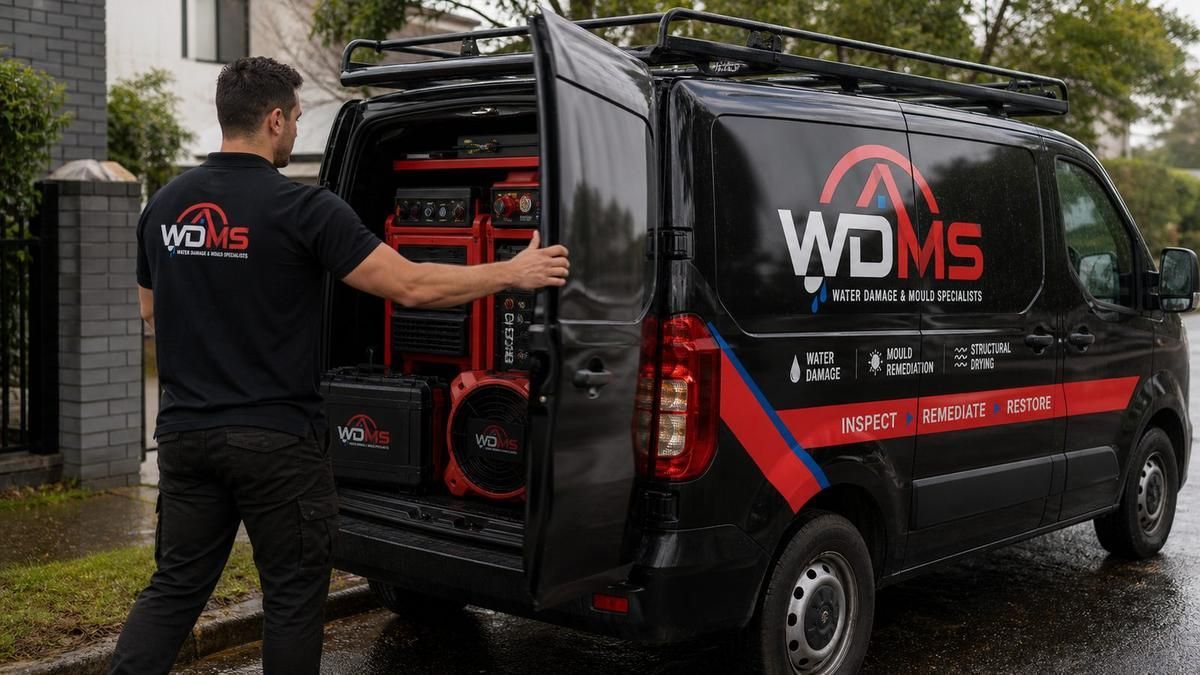
Emergency Sewage Response Callout
A first-response scope for fresh sewage events where containment and disinfection need to begin the same day, before contamination spreads deeper.
- Certified technician dispatched fast
- Immediate containment of the affected zone
- Standing sewage extraction on arrival
- Hospital-grade surface disinfection
- Damage photos for the claim file
- Phone guidance before crew arrives
Ideal for toilet overflows, contained backups and fresh contamination events.
Full Restoration
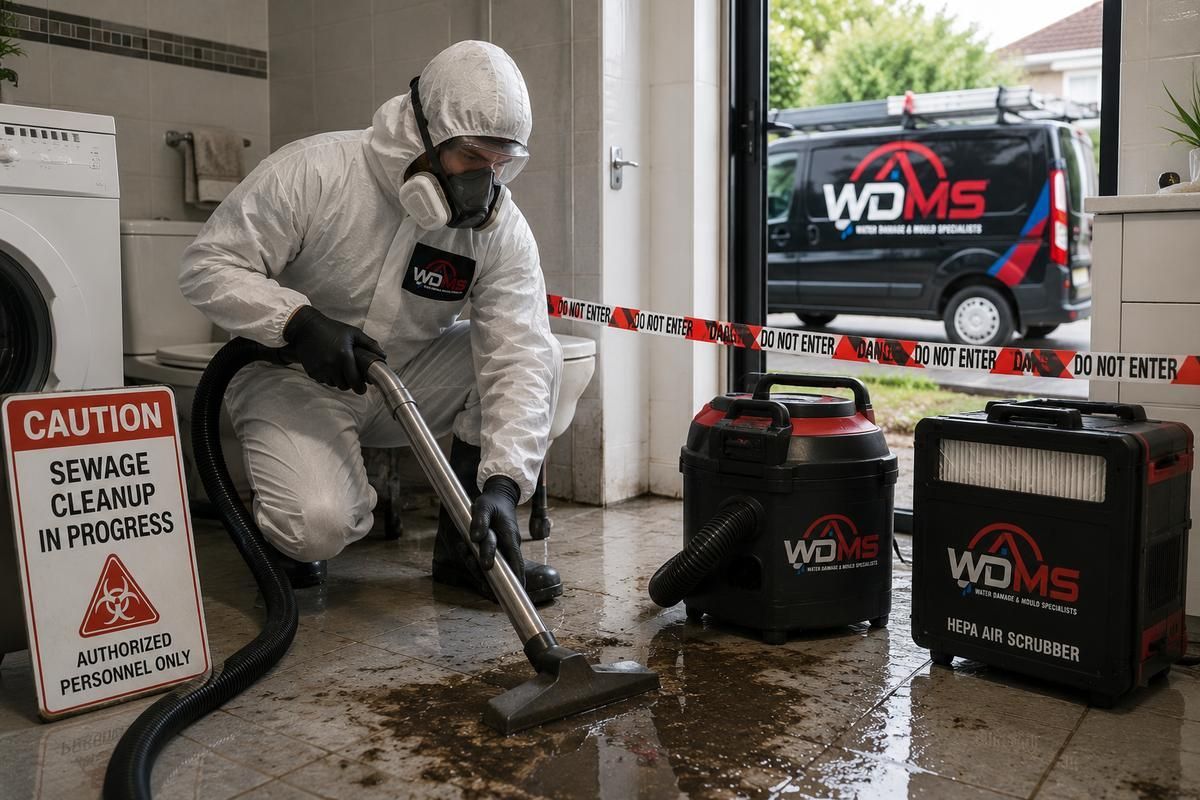
End-To-End Sewage Damage Cleanup
The most-requested scope across our Sydney jobs. Runs the full cleanup from assessment through sanitisation, drying and final sign-off with insurance-ready reporting.
- IICRC S500 contamination assessment
- Removal of unsalvageable porous materials
- Hospital-grade sanitisation across surfaces
- Daily moisture readings tracked
- Mould prevention treatment applied
- Full documentation pack at handover
Ideal for family homes, apartments and small commercial sewage events.
Large-Scale Coordination
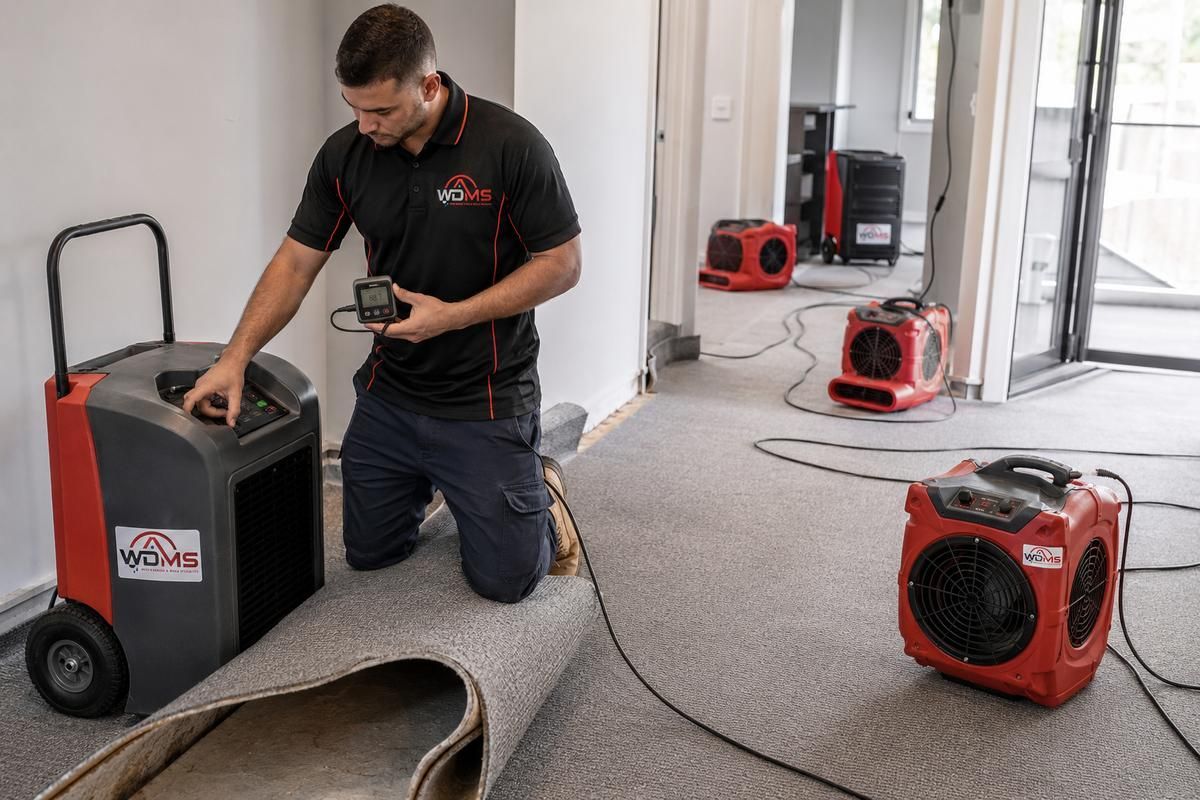
Commercial & Multi-Zone Sewage Cleanup
A coordinated scope for widespread contamination across strata buildings, retail spaces and multi-floor commercial sites, structured around trading hours where possible.
- Site-wide contamination mapping
- Industrial extractors on rotation
- High-capacity dehumidifiers deployed
- Continuity planning for trading zones
- Direct loss adjuster communication
- Commercial reporting for insurers and strata
Ideal for warehouses, offices, retail floors and strata sewage claims.
Our Sewage Damage Restoration Process
Every sewage cleanup runs through the same six steps. Same discipline on a single bathroom overflow, same discipline on a multi-room commercial event. How Do People Clean Up After A Flood Involving Sewage? The professional answer is a documented six-step sequence. Here is exactly what happens between your first call and the final handover.
Step 01
Emergency Response Call
Your call reaches a trained restoration technician, not a diverted answering service. We talk you through safely isolating the water source where possible, avoiding electrical hazards, and keeping people clear of contaminated water while a certified crew is already leaving the depot.
Step 02
On-Site Contamination Assessment
The team arrives in PPE and classifies the contamination category under IICRC S500. Thermal imaging cameras and calibrated moisture meters map the affected areas. We identify porous materials that will need removal, and surfaces that can be sanitised in place.
Step 03
Containment & Safety Setup
We install physical containment to stop the sewage spreading into unaffected areas and prevent further damage to surrounding rooms. HVAC systems are shut down where needed to prevent airborne contamination through ductwork. Technicians wear full personal protective equipment throughout, matching AS-IICRC S500 safety measures.
Step 04
Water Extraction & Contaminated Materials Removal
Industrial extractors remove standing sewage and contaminated water first. Porous materials that cannot be decontaminated safely, such as saturated carpets, underlay and heavily affected plasterboard, are bagged, catalogued and disposed of as hazardous materials under biohazard waste protocols.
Step 05
Hospital-Grade Sanitisation & Deodorisation
Every remaining surface is cleaned efficiently with hospital-grade disinfectants targeted to sewage contaminants. Walls, floors, subfloor cavities and structural timber all receive treatment. Odour management follows sanitisation, so the property smells clean instead of masked.
Step 06
Structural Drying & Mould Growth Prevention
Commercial dehumidifiers and air movers pull moisture out of the affected property before mould can develop. Daily moisture readings verify the drying process is on track. Once the readings confirm the structure is dry, repairs and restoration return the property to its original condition, and we hand over the full documentation pack for your insurance company.
The Drying Equipment That Powers Every Sewage Job
Sewage results depend on the specialised equipment that shows up. Household fans and supermarket disinfectant will not clear a black water event. Below is the kit our vans carry before we leave the depot.
- Industrial water extraction units for rapid removal of standing sewage
- Commercial dehumidifiers that pull excess moisture from humid air
- High-velocity air movers for wall cavities and subfloor drying
- Calibrated moisture meters for timber, plasterboard and concrete slabs
- Thermal imaging cameras that detect hidden moisture without opening walls
- HEPA air scrubbers for airborne pathogen filtration during cleaning
- Hospital-grade fogging systems for treatment of contaminated surfaces
- Full Category 3 personal protective equipment for the entire team
Every piece of equipment earns its place. Nothing appears on the invoice unless it worked on the job.
Local Experts For Every Sydney Property Type
Sewage in a Bondi apartment reads differently than sewage in a Parramatta office. The certified process holds. What shifts is how the crew moves around you.
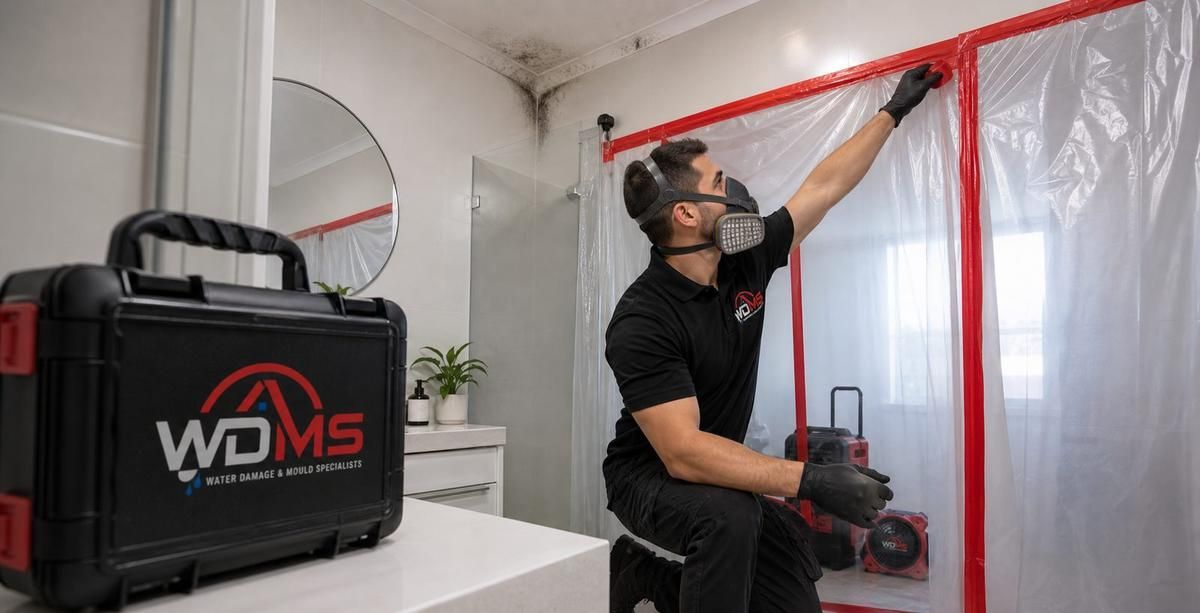
Residential Homes
We isolate the affected rooms, keep the rest of the house livable, and work sanitisation and drying through the contaminated zones without shutting your home down.
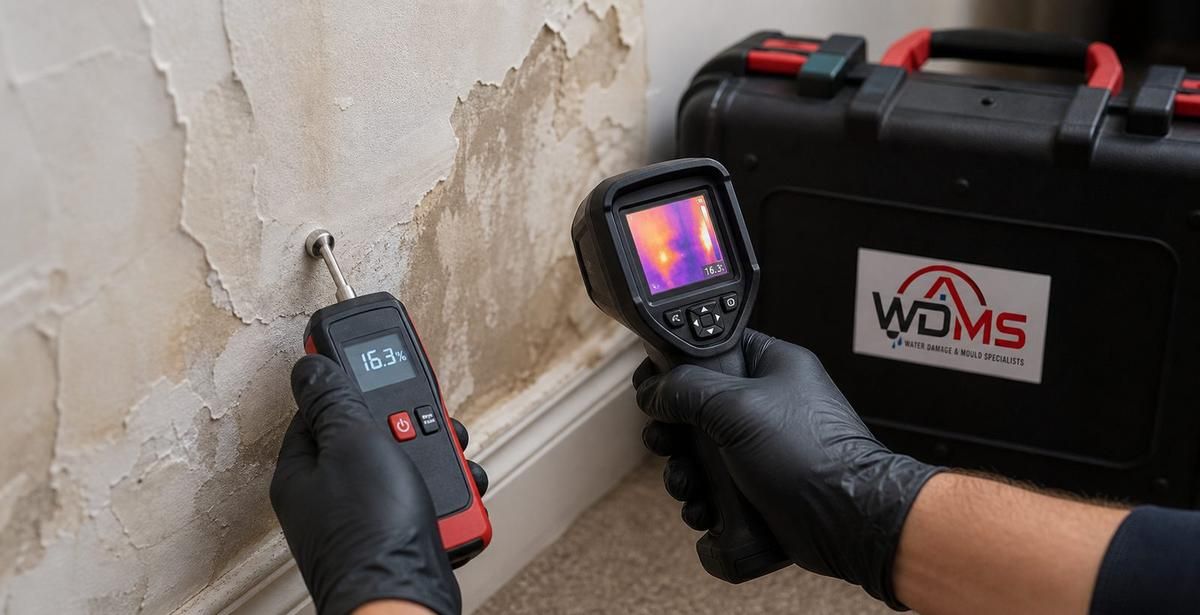
Strata & Apartment Buildings
Owners, managers and insurers each get the same evidence file. Dated photos, readings and sanitisation logs land with everyone at once, so accountability stays clean.
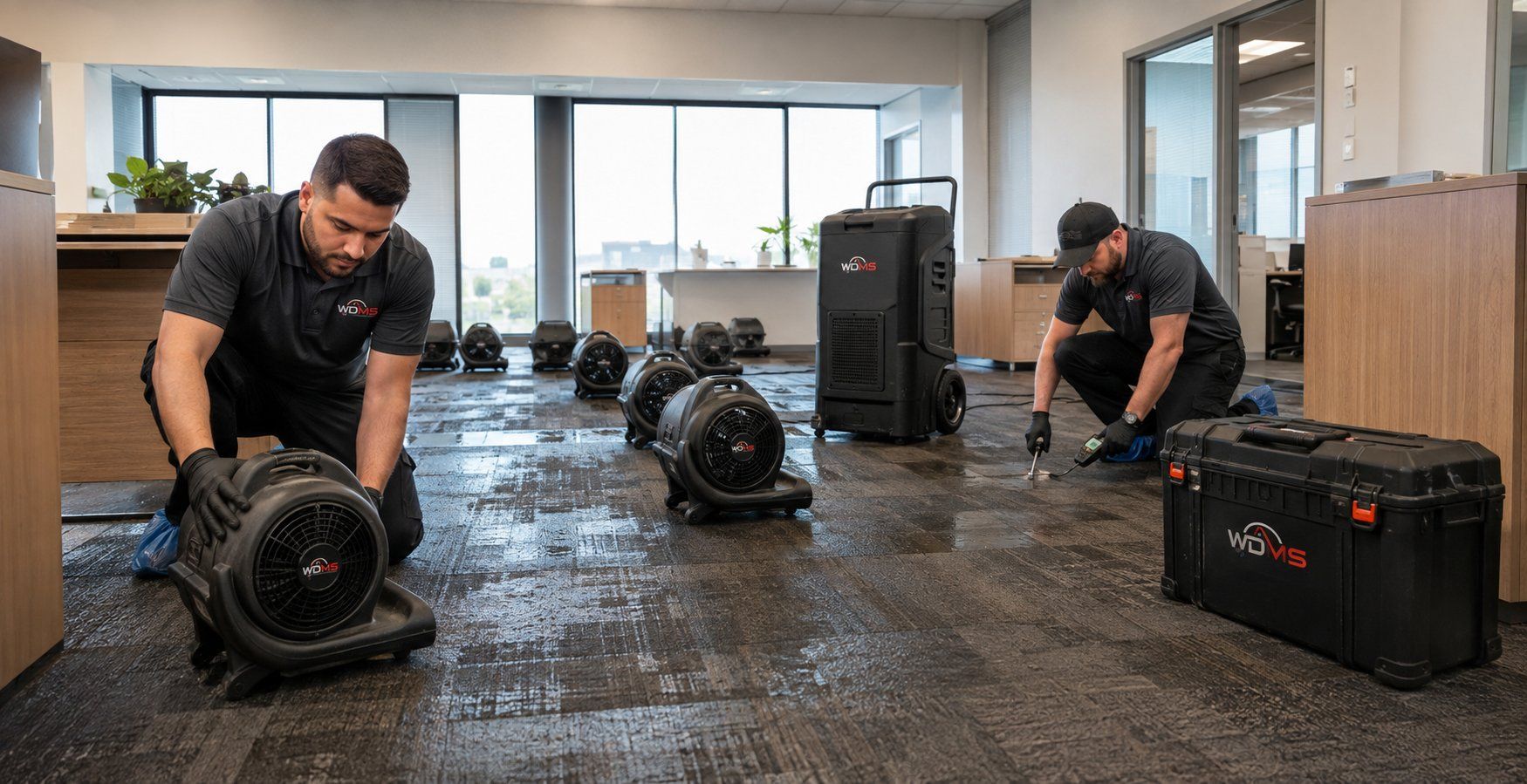
Commercial Properties
Downtime is the real invoice. Our crew works around trading hours, isolates the affected zones, and protects stock and equipment while cleanup and drying run in the background.
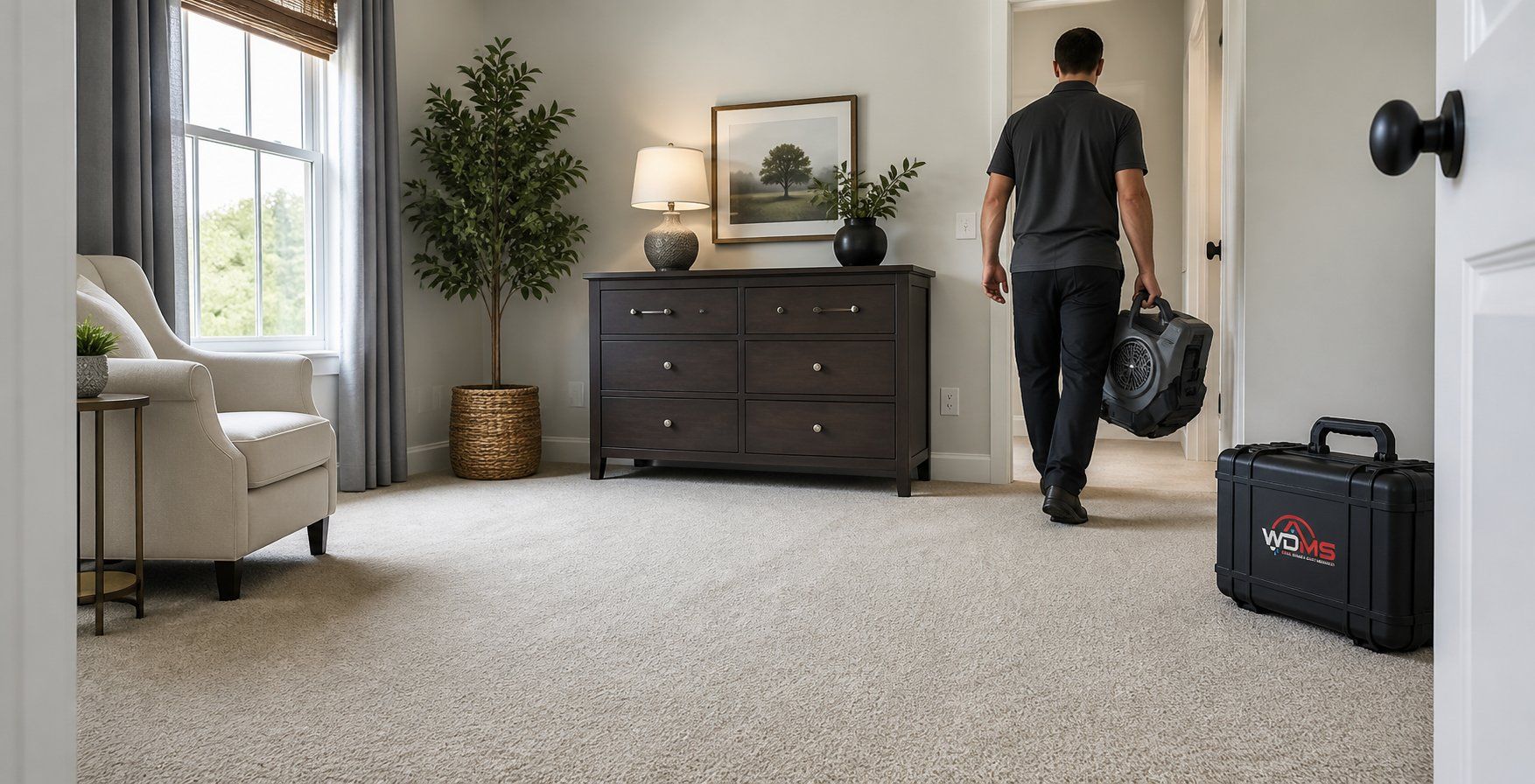
Rental & Investment Properties
Property managers get a ready-to-forward file, not update chains. Photos, moisture readings, a written scope and one contact number, packaged for the owner and insurer from day one.
Sewage Claims Trusted By Major Australian Insurers
Sewage insurance claims stall for one reason more than any other. The file the first team handed to the insurer could not answer the questions on the desk. A few blurry photos, a rough invoice and no moisture readings raises more questions than it settles, and every question adds a week to your payout.
We build the file differently from the moment we walk in. Every affected room gets its own moisture log. Thermal scans back up what a photo alone cannot prove. Every piece of removed material is photographed, catalogued and disposed of under biohazard protocols. Disinfection is logged with the product used, the surfaces treated and the technician who applied it.
That is what separates a sewage claim that moves from one that sits in a queue. Whether the file lands with a loss adjuster, a broker or a strata manager, it speaks their language from page one. Where authorised, our team liaises directly with the insurer, cutting out the back-and-forth that usually eats weeks off the timeline. We cannot decide what your policy covers. We can make sure the paperwork never gives anyone a reason to slow the process down.
Mould Remediation Sydney: Common Questions
Can you remediate mould yourself?
For small patches under one square metre on non-porous surfaces, careful DIY mould removal is possible using natural agents like white vinegar and proper protective gear. Beyond that, professional mould removal is highly recommended. Larger mould infestations, porous surfaces like plasterboard, and any recurring mould problem need proper containment, HEPA filtration and moisture source correction, which household methods cannot safely provide.
How do you know if your house has toxic mould?
Common signs include dark patches on walls or ceilings, a persistent musty smell, condensation on windows, and health symptoms like coughs, allergies or a stuffy nose that clear when you leave the property. Confirming whether the mould is toxic requires a professional mould inspection with air quality analysis. We assess visible signs, take moisture readings, and identify the specific extent of the contamination.
How do you get rid of mould permanently?
Permanent removal means treating the moisture source, not just the surface. Effective mould remediation involves identifying and correcting where the moisture is coming from, whether that's a water leak, condensation, or inadequate ventilation. Physical removal, HEPA vacuuming, proper drying and prevention planning together aim for permanent removal lasting over 12 months.
Is mould remediation a good idea?
Yes, especially for any mould affected area larger than one square metre, mould that keeps returning, or households with children, elderly members, or anyone with compromised immune systems. Professional remediation addresses health risks, structural damage, and property value in one process, which is why property managers and insurers consistently recommend it.
How do you remove mould yourself?
For a small area, wear PPE including a P2 mask and gloves, ventilate the space, and use damp cloths rather than dry scrubbing so mould spores do not spread. White vinegar works on hard surfaces. Bleach is not suitable for porous surfaces. Dispose of contaminated cloths in a sealed bag. If the mould covers more than one square metre or returns after cleaning, stop and call a professional mould remediation company.
What permanently kills mould?
No single product permanently kills mould, because mould is a symptom of moisture. Antimicrobial treatments and HEPA vacuuming handle the immediate mould, but permanent removal requires correcting the moisture cause. Repairing affected areas, fixing plumbing leaks, improving ventilation, and keeping humidity below 60% are what actually stop mould returning long-term.
How do you get rid of black mould?
Black mould needs professional handling because of the health risks and structural spread. Our process starts with a mould inspection to confirm the extent, followed by full containment, HEPA air filtration, physical removal using eco-friendly treatments, structural drying and moisture source correction. For black mould in bathrooms, ceilings or wall cavities, DIY methods are not safe, and professional help is the right next step.
How long does mould remediation take?
Most residential mould remediation projects take a couple of hours to a couple of days, depending on the extent of the mould infestation, the size of the affected areas, and whether structural drying is required. Larger commercial jobs can take several days. Accurate timing follows the initial inspection report.
How much does mould remediation cost in Sydney?
Costs depend on the size of the mould affected area, the location of the mould growth, and whether specialised services like air quality analysis or structural drying are included. Every quote follows a detailed inspection so pricing reflects the actual scope. We provide transparent, written quotes with no hidden extras.
Ready To Get The Sewage Out, The Bacteria Gone, And Your Property Back In Days?
Sewage never settles down on its own. Bacteria keep working through porous materials, moisture keeps travelling into walls and subfloors, and the repair bill keeps climbing every hour the spill sits. Getting a certified crew on site early is the difference between a documented cleanup and a full rebuild weeks down the track.
The WDMS Standard For Sewage Damage Cleanup
- IICRC-Certified Water Damage Restoration Technician
- 24/7 Emergency Response Across Sydney
- Hospital-Grade Disinfectants On Every Job
- Insurance-Ready Reports Trusted By Major Australian Insurers
- Free Moisture Assessment On Approved Work
- Trusted By Homeowners, Strata Managers And Commercial Sites
Act Fast. Save More. Rebuild Less.
Send us photos of the affected area. Tell us what happened. We call you back with a plan, a free quote, and a certified crew already loading the van.
24/7 Emergency Response · IICRC-Certified · Hospital-Grade Sanitisation · Insurance-Ready Reporting