
How to Make a Water Damage Insurance Claim in Australia
Start a water damage insurance claim with safety, evidence, and quick contact with your insurer. Take pictures of the damage before you start cleaning up, write down what happened, try to stop any damage if it is safe to do so, and save all bills and records from the restoration process. Your insurance policy determines whether the damage is covered, so don't assume every leak, flood, or pipe problem is automatically covered.
Good records help your insurer understand what caused the damage, how serious it is and when it happened. Whether you're a Sydney homeowner, a property manager or a business owner, clear documents make every conversation with your insurer easier. For eligible restoration work, we provide the photos, moisture readings and reports that support your claim.
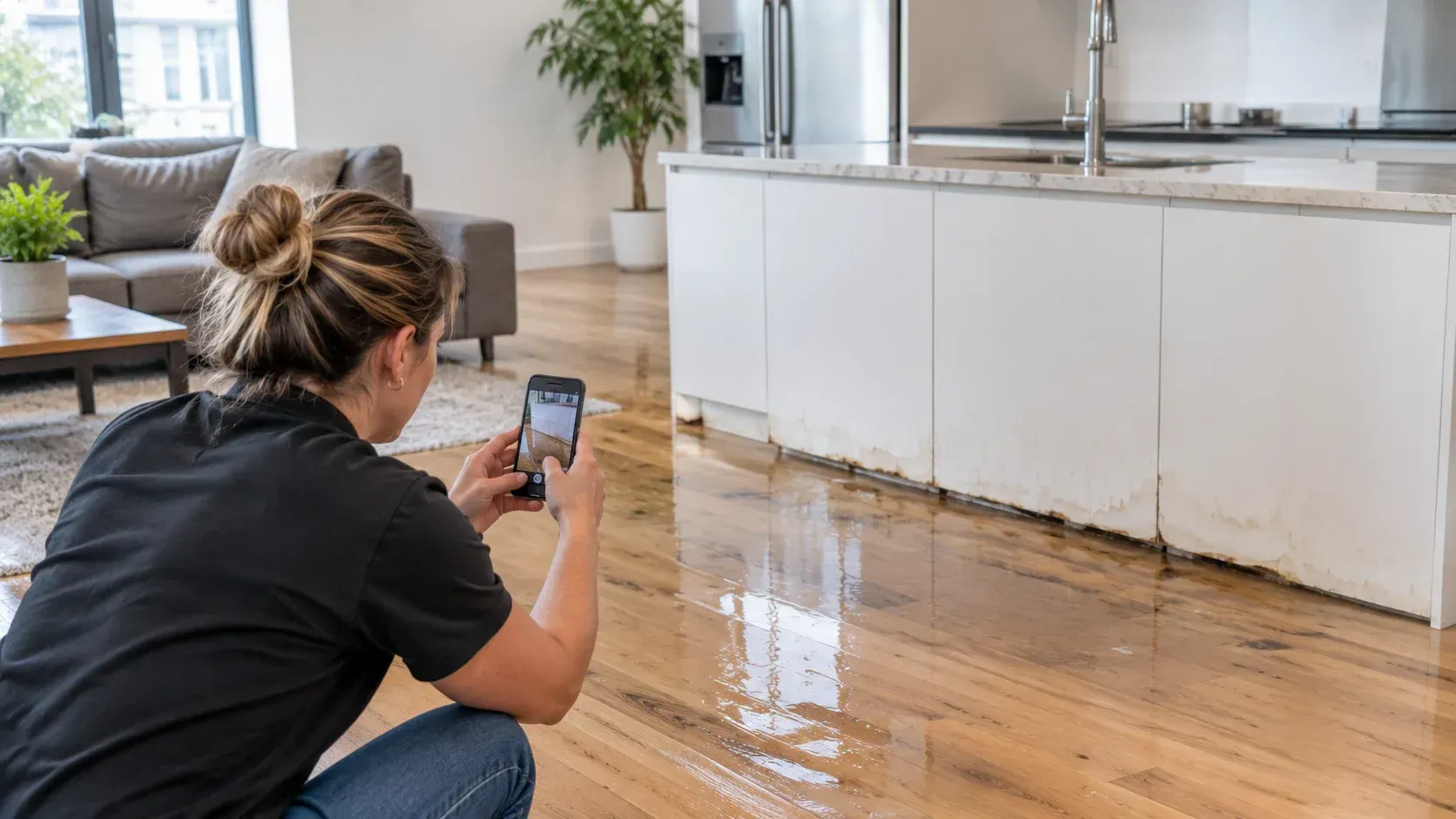
How to Start a Water Damage Insurance Claim
Start by making the property safe. If water has reached electrical areas, stay clear and arrange appropriate electrical assessment. If you can safely stop a leaking pipe or appliance, do so. Then contact your insurer as soon as reasonably practical, even when the extent of damage is unknown.
Your insurer can explain your policy, your excess, the claim process and what they need before they approve work. Before you call, find your policy and check the Product Disclosure Statement (PDS), so you know what your cover includes. Australian Government guidance recommends checking the policy and contacting the insurer promptly.
What to Record Before Cleanup
Create a record while the original condition remains visible. Don't throw away damaged belongings just because they look ruined. If an item is a safety hazard and must be removed, photograph it first and ask your insurer what evidence it needs.
- Photos and video: Take water damage photos for insurance before you move anything. Capture walls, ceilings, floors, cabinets, furniture, appliances and any visible water lines.
- Cause of loss: Note the cause if you know it, such as a pipe, a broken appliance, water coming through the roof, water from a storm, or water from a flood.
- Damaged belongings: Make a list of the items that were damaged, and add model or serial numbers if you have them.
- Expenses: Save all bills and receipts for things like emergency work, storage, moving, or any other costs.
Does Home Insurance Cover Water Damage?
It depends on your policy and what caused the damage. Many home policies cover sudden and accidental escape of water, such as a burst pipe or a failed washing-machine hose. Damage from a slow leak, gradual seepage or general wear and tear is often excluded. That's why a water leak insurance claim can be treated very differently from a sudden burst.
Storm and flood cover also varies. A flood damage insurance claim may be covered, optional or excluded, depending on your policy wording, according to
NSW guidelines. Your insurer may look closely at where the water came from, such as a pipe, rain, a storm or a flood. Your PDS sets out the exact terms. For independent guidance, see the home insurance claim advice from ASIC Moneysmart before you decide what your cover includes.
Water Damage Documentation for Insurance Claims
Good documentation connects the event to the damage. It should show what the property looked like, where moisture was found, what action was taken, and how affected areas changed during restoration. A water damage report for insurance may include dated photographs, moisture readings, drying progress, notes on affected areas and a scope of work. These records don't decide whether you're covered, but they give your insurer or assessor clearer evidence about the property's condition.
Moisture readings for an insurance claim matter most when water has moved beyond what you can see. A floor can look dry while moisture remains in the subfloor, wall cavities or other building materials. For extensive water intrusion, a written scope can separate immediate mitigation from later repair work. That distinction helps show what was completed and what still needs assessment.
What to Do Before Repairs Begin
Stopping further damage is different from starting permanent repairs. You may need to act quickly to protect your property, but major building work often needs your insurer's approval first. The NSW Government advises property owners to check their policy and speak to their insurer before repairing or rebuilding. Take photos before you remove or throw anything away. Electrical, gas, water and sewage checks should be done by licensed professionals.
Don't leave ongoing damage while you wait on paperwork. Ask your insurer which emergency steps are allowed and what proof they need. Keep every record of the work, including photos, readings and bills.
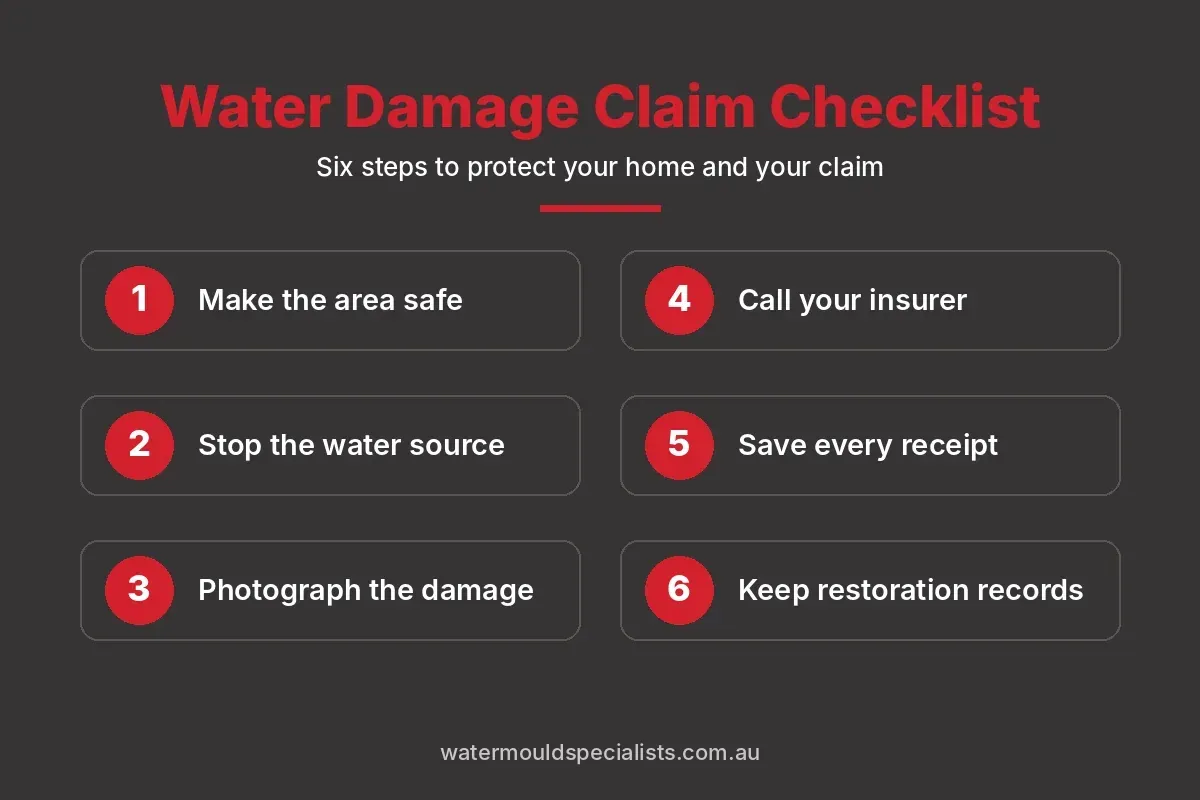
A Simple Water Damage Claim Checklist
Use this sequence when a leak, storm, or flood affects property.
- Make the area safe and stop the source if possible.
- Photograph and video the original damage.
- Contact your insurer and obtain a claim number.
- Ask what emergency work is authorised.
- Record any damaged items. Save all receipts.
- Arrange for extraction. Dry if necessary.
- Keep all restoration reports, measurements, photos, and bills.
- Review the assessment carefully before making repairs.
DIY Cleanup vs Professional Restoration for an Insurance Claim
A homeowner may handle a small, isolated water event when the source is controlled, and there is no safety concern. Small amounts of clean water on hard surfaces can be straightforward to dry. Larger losses are different. Water may move underneath flooring, into walls, through insulation, or across several rooms.
| Home Cleanup | Professional Restoration |
|---|---|
| Suits small amounts of safe surface water | Better for widespread or hidden moisture |
| Basic drying and cleaning | Extraction, drying equipment and moisture testing |
| Simple records kept by the owner | Restoration file with readings and progress records |
| Hard to check wall cavities and subfloors | Specialist equipment checks hidden areas |
| Difficult after major flooding | Suits damage across several rooms or materials |
The choice depends on water volume, source, affected materials, contamination risk, and whether you can confirm the property is dry. Uncertain causes or moisture inside building materials justify professional assessment.
When Professional Water Damage Restoration Makes Sense
Professional help makes sense when standing water remains, several rooms are affected, moisture has reached flooring or walls, or contaminated water is involved. Water damage can still be hidden when surfaces look dry, so check carefully.
A restoration team can assess damaged areas, remove standing water, manage drying, monitor moisture, and keep restoration records. Ask what documents will be supplied and whether the contractor can communicate with your insurer or loss adjuster about water damage. We provide water extraction, structural drying, moisture assessment and insurance-ready documentation for eligible restoration work across Sydney. We work with homes, strata buildings and commercial properties.
How We Help With Water Damage Insurance Claims in Sydney
If your property needs restoration, Water Damage & Mould Specialists Water Damage & Mould Specialists can assess affected areas, carry out water extraction and structural drying, and maintain eligible photos, readings, records, and restoration documentation for your insurer or loss adjuster.
We can keep the restoration timeline organised, so relevant claim records stay with the work completed at the property from start to finish.
If you need help with
water damage restoration in Sydney,
contact our restoration team. We assist properties across the Eastern Suburbs, Northern Beaches, and
South-West Sydney.
Frequently Asked Questions (FAQs)
Should I wait for my insurer before removing standing water?
No. Safety and stopping further damage come first. Contact your insurer as soon as you can and ask what emergency work is allowed. Photograph everything before cleanup, and keep records of all work and costs.
Can an insurer reject a claim because I started emergency cleanup?
Emergency steps to limit damage are different from permanent repairs. Tell your insurer what happened and what you did. Where it's safe, photograph the damage before cleaning up, and keep every receipt. Whether you're covered depends on your policy and your circumstances.
What should I ask a restoration company before work starts?
Ask what areas will be assessed, how moisture will be monitored, what work will be done, what records will be supplied, and how the company will communicate with your insurer or loss adjuster, if authorized. Clear answers reduce confusion later.
Is a slow leak covered by home insurance?
Often, it isn't. Many policies cover sudden water damage, like a burst pipe, but exclude damage from slow leaks, gradual seepage or wear and tear. Check your PDS or ask your insurer how your policy treats leaks.
Who pays when water comes from another unit in a strata building?
It depends on where the leak started. Damage from common property, such as shared pipes, may fall under the strata building policy. A leak inside one unit may be that owner's responsibility. Your strata manager and insurer will decide, and clear photos and moisture readings help them do it.